

Explore our decorative lighting ideas list to enhance every room with style. From chandeliers to DIY options, transform your home effortlessly!
TL;DR:
- Lighting significantly influences a room’s emotional tone and architectural character beyond mere illumination. Layering ambient, task, and accent lights creates depth, while textured fixtures like crystal chandeliers or cove lighting add sculptural elegance and ambiance. DIY options such as string lights and upcycled fixtures offer affordable, impactful ways to enhance interior design.
Lighting does more to a room than most homeowners realize. The right fixture doesn’t just illuminate a space. It sets the entire emotional tone, defines the architectural character, and pulls a design concept together in ways that paint color and furniture simply can’t. This decorative lighting ideas list covers everything from sculptural crystal chandeliers to budget-friendly DIY string lights, giving you a practical, visually rich guide built around 2026’s most exciting design directions. Whether you’re starting from scratch or refreshing a single room, you’ll find specific ideas here worth acting on.
Key takeaways
| Point | Details |
|---|---|
| Layer your lighting | Use ambient, task, and accent sources together to create depth and warmth in any room. |
| Match fixtures to the room’s purpose | A dramatic chandelier suits a dining room; a tripod floor lamp works better for a reading nook. |
| Trends favor texture and materials | Alabaster, verdigris, and sculptural forms dominate 2026 lighting design. |
| DIY options are genuinely effective | String lights, upcycled fixtures, and adhesive-mounted LED strips can transform a space affordably. |
| Crystal lighting multiplies impact | Real crystal prisms scatter and amplify light in ways synthetic materials cannot replicate. |
How to choose decorative lights that actually work
Before you browse fixtures, you need a framework. Most people pick lighting based on looks alone, then wonder why the room still feels flat or harsh. The real secret is understanding that no single fixture carries a room. Layered lighting works by combining ambient, task, and accent sources to create functional depth. Think of ambient light as the base, task light as the workhorse, and accent light as the storyteller.
On the numbers side, ambient lighting needs roughly 1,500 to 3,000 lumens for a living room, task lighting should deliver 400 to 800 lumens per source, and accent lighting works best between 50 and 200 lumens per source. Getting these proportions right matters far more than picking the most beautiful fixture in the catalog.
For 2026, the biggest shift is toward fixtures that function as sculptural statements. Designers now favor textured surfaces, asymmetrical profiles, alabaster shades, and verdigris metal finishes. These aren’t just decorative choices. They change how light diffuses and bounces around a room, which directly affects ambiance.
A few principles to guide your selections:
- Choose fixtures whose finish complements your existing hardware and furniture tones
- Reserve dramatic statement pieces for rooms with high ceilings and strong natural light
- Use warm white bulbs (2700K to 3000K) for living and dining spaces; cooler tones belong in workspaces
- Consider dimmability before you buy. A chandelier you can’t dim is half the fixture it could be.
Pro Tip: When you’re trying to figure out how to choose decorative lights for a specific room, photograph the space in both daylight and evening conditions. The two photos will reveal very different problems that require different lighting solutions.
1. Crystal chandeliers
A crystal chandelier is the single most transformative fixture you can install. When real crystal prisms catch light, they scatter it across walls and ceilings in patterns that no painted surface or fabric can replicate. The effect is genuinely architectural. Modern crystal chandeliers aren’t limited to grand traditional spaces. Sleek, linear designs with Swarovski-quality elements work beautifully in contemporary dining rooms and entryways. For deeper guidance on selecting the right look, the 2026 chandelier design trends from Crystalplace show how the category has evolved toward cleaner, more versatile profiles.

2. Cove lighting
Cove lighting is one of the most underrated ideas on any decorative lighting ideas list. Installed along the upper perimeter of a room, it creates a soft, luminous glow that makes ceilings feel higher and rooms feel calmer. High-performance cove systems operate between 4 and 12 watts per foot and mount 6 to 24 inches from the ceiling surface to produce that signature seamless glow. The key design principle: effective cove lighting is subtle and uniform, designed to reduce contrast and glare rather than compete with your furniture for attention. For the smoothest result, use COB LED strips instead of standard SMD strips. COB strips eliminate the visible dot pattern that cheaper options show, producing a continuous band of light that looks professionally installed even when it isn’t.
3. Arc floor lamps
Arc lamps do something no ceiling fixture can: they bring light down into the center of a seating arrangement without requiring any hardwiring. A well-placed arc lamp over a reading chair or a sofa anchors the furniture grouping and adds a sculptural quality all on its own. Floor lamps work best when positioned next to seating or used to wash light into a dark corner. They’re also one of the most flexible tools for layered lighting because you can move them as your room evolves. Current creative lighting designs favor arcs with matte black or warm brass finishes and linen or rice paper shades that diffuse light softly.
4. Pendant clusters
A single pendant over a kitchen island is good. A cluster of three to five pendants at varying heights is genuinely stunning. The asymmetry creates visual tension that makes a room feel curated rather than cookie-cutter. Mix materials deliberately: a cluster combining smoked glass, brushed brass, and small crystal drops creates layered visual texture that catches the eye at different times of day. This is one of the coolest lighting ideas for open-plan living spaces because it defines zones without walls.
5. LED strip lighting
LED strips have moved well beyond the “blue glow under the bed” phase. When used thoughtfully, they’re one of the most versatile ambient lighting suggestions available for both modern and transitional spaces. Place them under floating shelves, behind a TV panel, beneath kitchen cabinets, or along stair risers. Smart LED strips let you shift color temperature and intensity from your phone, which means one installation can serve multiple moods and times of day. Look for strips with a CRI (color rendering index) above 90 for light that makes colors look accurate and rich.
6. Wall sconces
Sconces are often treated as afterthoughts, placed symmetrically on either side of a mirror or bed without much consideration. But used boldly, they’re one of the most powerful unique lighting concepts available. Try a single oversized sconce on one side of a hallway or a pair of curved, arm-style sconces flanking a fireplace. In 2026, sconce design leans heavily into organic metal forms, hammered textures, and the kind of handcrafted quality that makes them feel like collected objects rather than store purchases. They’re also ideal for adding accent light at eye level, which most ceiling-focused schemes miss entirely.
7. Lanterns and pendant globes
Rattan lanterns, hand-blown glass globes, and perforated metal pendants all share one quality: they cast patterned light. When a lantern throws lace-like shadows onto a white wall, it creates atmosphere that no direct light source can match. This is especially effective in dining rooms and covered outdoor spaces. For interiors, hang them at table height rather than ceiling height to keep the effect intimate rather than institutional.
8. String lights and fairy lights
Don’t dismiss string lights as a college-dorm idea. Warm-white fairy lights draped along a bookshelf edge, woven through a plant arrangement, or gathered into a glass vase create genuinely beautiful ambient light that’s soft enough for evenings. These are DIY decorative lights at their most accessible, and the effect punches well above the price point. One practical note: when installing string lights with adhesive clips, wait at least 60 minutes after applying the clips before hanging the lights, and buy 10 to 15 percent more cord than you think you need. The extra length prevents the tight, sagging look that makes cheap installations obvious.
9. Tripod floor lamps
A tripod floor lamp is one of the few fixtures that looks intentional in almost any room style, from mid-century modern to Scandinavian minimalist to relaxed coastal. The three-legged base creates visual interest at floor level while the shade directs light upward for a warm ambient wash. Use one in a corner that feels dead or unanchored. It simultaneously solves a lighting gap and a decor gap.
10. Uplighters and torchieres
Uplighters aim light toward the ceiling, bouncing it back down as soft, diffused ambient illumination. This technique is borrowed from high-end hotel lobbies and works just as well in a living room. A torchiere placed in a corner can make a low ceiling feel taller and give the whole room a warmer character. They’re also among the more affordable cool lighting ideas with a high visual payoff.
Quick comparison: which fixture fits your space?
| Fixture type | Best room size | Style fit | Ambiance level | Installation complexity |
|---|---|---|---|---|
| Crystal chandelier | Large | Traditional, glam, transitional | High | Moderate to high |
| Cove lighting | Any | Modern, contemporary | Subtle but high | High |
| Arc floor lamp | Medium to large | Modern, Scandinavian | Medium | None (plug-in) |
| Pendant cluster | Medium | Eclectic, modern | Medium to high | Moderate |
| LED strip lighting | Any | Contemporary | Adjustable | Low |
| Wall sconces | Any | Any | Medium | Moderate |
| String lights | Small to medium | Bohemian, casual | Low to medium | Very low |
Pro Tip: For small rooms, skip the statement overhead fixture and layer two or three smaller sources at different heights instead. The visual variety reads as intentional design, and the distributed light makes the room feel larger.
DIY and budget-friendly decorative lighting ideas
Creative lighting doesn’t require a contractor or a big budget. Some of the most interesting DIY decorative lights come from working with what you already have or repurposing unexpected materials.
- Upcycle vintage fixtures: A dated brass chandelier with dark paint and new bulbs becomes a completely different object. Strip and repaint, swap globe bulbs for Edison-style filaments, and the result looks deliberately vintage.
- Jar and vessel lighting: Fill a large glass jar or ceramic vase with fairy lights and a small battery pack. Place it on a bookshelf or nightstand for soft, sculptural ambient light with zero hardwiring.
- Plant-integrated lights: Weave warm-white LED strings through a large trailing plant like pothos or string-of-pearls. The light filters through the leaves in a way that feels almost organic.
- Adhesive-mounted LED strips: These install without tools and work under floating shelves, inside closets, or along the back of a desk. They’re one of the most accessible ambient lighting suggestions for renters who can’t alter walls.
- Paper lantern clusters: Inexpensive rice-paper lanterns in varying sizes, grouped and hung at different heights, create the same visual drama as a high-end pendant cluster for a fraction of the cost.
Always check your wattage limits before installing DIY setups with older fixtures, and use LED bulbs rather than incandescent to keep heat output and energy draw low.
My honest take on decorative lighting
I’ve spent years watching people spend serious money on furniture and art, then light the whole room with a single overhead fixture that flattens everything they’ve worked to create. It’s the most common and most fixable interior design mistake I see.
Here’s what I’ve learned: the fixtures that impress you least in a showroom often do the most work in a real room. Subtle cove lighting, a well-placed floor lamp, a pair of sconces at eye level. These are the layers that create warmth and dimensionality with 3 to 5 carefully chosen sources. Meanwhile, the dramatic chandelier you fell in love with online becomes just background noise if nothing else is working with it.
My strongest opinion on this: treat your lighting plan the way you treat your furniture plan. Sketch out the room, mark where shadows fall at night, and identify what you actually want people to notice. Then design the light around those goals. Texture, asymmetry, and restraint consistently outperform “more fixtures” as a design strategy. And when you do invest in one great statement piece, like a real crystal chandelier, make sure the surrounding light is subtle enough to let it do its job.
— BCC
Bring these ideas to life with Crystalplace
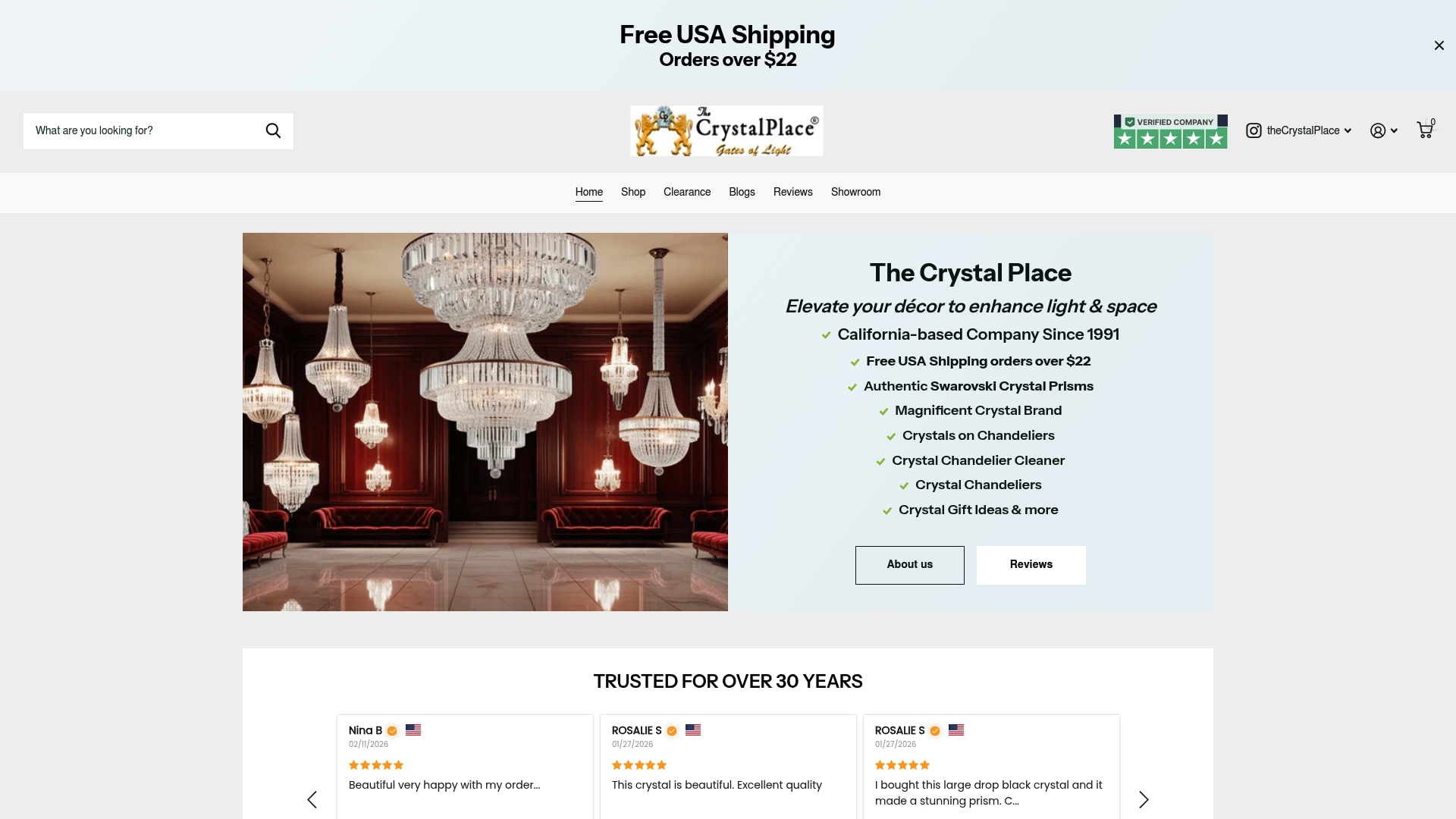
If crystal chandeliers or prism-based lighting caught your attention in this list, Crystalplace is worth exploring seriously. Since 1991, the brand has sourced authentic Swarovski and premium crystal components directly from manufacturers, which means the light scatter and brilliance you see in photos is what you actually get at home. From individual crystal prisms and hanging decor to custom chandelier builds and repair parts, Crystalplace carries everything needed to create a crystal lighting effect that real materials deliver and synthetic alternatives simply can’t match. Free shipping applies on U.S. orders over $22, which makes experimenting with accent crystals genuinely low-risk. Browse the full collection and see how crystal lighting enhances interiors before committing to a larger purchase.
FAQ
What is the best way to layer decorative lighting?
Use at least three sources: ambient light for overall illumination, task light for functional areas, and accent light to highlight architectural features or artwork. Layered lighting with 3 to 5 sources consistently produces the warmest and most dimensional results.
What lighting trends are leading in 2026?
Designers currently favor textured surfaces, alabaster shades, verdigris metal finishes, and sculptural asymmetric profiles. Hidden cove lighting paired with minimal visible fixtures is also a dominant trend this year.
How do I hang string lights without damaging walls?
Use adhesive clips rated for the cord weight, and allow them to set for at least 60 minutes before hanging. Buy 10 to 15 percent more cord length than the measured distance to avoid pulling tension on the clips, which causes both the clips and cord to fail prematurely.
Are crystal chandeliers only suited to traditional interiors?
No. Modern crystal chandelier designs use clean geometric frames and restrained crystal arrangements that work well in contemporary and transitional spaces. The key is matching the chandelier’s silhouette to the room’s proportions rather than its style category.
What’s the easiest DIY decorative lighting idea to start with?
Fairy lights in a glass vessel or jar require no tools, no wiring knowledge, and no permanent installation. They deliver genuine ambient warmth immediately and cost almost nothing to set up, making them the most accessible starting point on any decorative lighting ideas list.
Recommended
- Holiday Sparkle: Crystal Decoration Ideas – CrystalPlace
- Why choose crystal lighting: elevate your space in 2026 – CrystalPlace
- Types of crystal prisms for stunning home lighting in 2026 – CrystalPlace
- Enhance Your Home with Crystal Interior Lighting – CrystalPlace