

Learn how to replace chandelier crystals with precise measuring, matching, and installation techniques that avoid 65% of common damage. Expert DIY guide for stunning results.
Have you noticed dull or dangling crystals that ruin your chandelier’s elegance? Mismatched replacements cause uneven hanging in up to 30% of DIY attempts, leaving fixtures looking worse than before. This guide walks you through precise measuring, matching, cleaning, and installing replacement crystals to restore your chandelier’s original sparkle and balance with confidence.
Key Takeaways
| Point | Details |
|---|---|
| Accurate measurement including hole size is essential | Measure crystal length minus connections and verify hole diameter with calipers. |
| Match crystal shape and connection type for uniformity | Use identical shapes and connector styles to maintain consistent appearance. |
| Use pH-neutral cleaners to prevent damage | Avoid ammonia or acid-based products that etch or dull crystal surfaces. |
| Follow stepwise installation to avoid breakage | Turn off power, remove old crystals carefully, attach hardware first, then hang crystals in sequence. |
| Avoid common mistakes by preparing properly | Double-check measurements, match connectors exactly, and always use safety gear before starting. |
Tools and Preparation Needed
Successful crystal replacement starts with assembling the right tools and creating a safe workspace. You will need needle-nose pliers for manipulating small connectors, wire strippers if replacing wiring, a voltage tester and safety equipment are critical to prevent hazards during chandelier work, a sturdy ladder, and lint-free cotton gloves to prevent fingerprints. Keep soft cloths nearby for quick cleaning and a small container to hold removed parts.
Safety precautions cannot be skipped. Always turn off the circuit breaker controlling your chandelier, not just the wall switch. Test the fixture with your voltage tester to confirm zero power flow before touching any metal components. Secure your ladder on level ground and have someone nearby to hand you tools and steady the base.
Before starting removal, consult a chandelier crystal replacement checklist to verify workspace readiness. Clear the area below your chandelier of furniture and fragile items. Lay down a soft blanket or padding to catch any accidentally dropped crystals. Wearing lint-free gloves protects both you from sharp edges and crystals from oils that attract dust.
| Tool | Function |
|---|---|
| Needle-nose pliers | Manipulate pins, rings, and chain links |
| Voltage tester | Confirm power is off before touching wiring |
| Lint-free gloves | Prevent fingerprints and protect hands |
| Sturdy ladder | Safe access to chandelier height |
| Soft cloths | Clean crystals without scratching |
| Small container | Organize removed hardware |
Pro Tip: Take photos of your chandelier from multiple angles before removing any crystals. These reference images help you remember exact placement patterns and connector orientations during reinstallation.
How to Measure Chandelier Crystals Correctly
Precise measurement determines whether replacement crystals fit and hang properly. Start by measuring crystal length from top to bottom, excluding the connection hole at the top. Use a ruler or digital caliper for accuracy. Measurement accuracy within 1/16 inch critical for aesthetic balance because even small differences create visible misalignment when light hits the fixture.
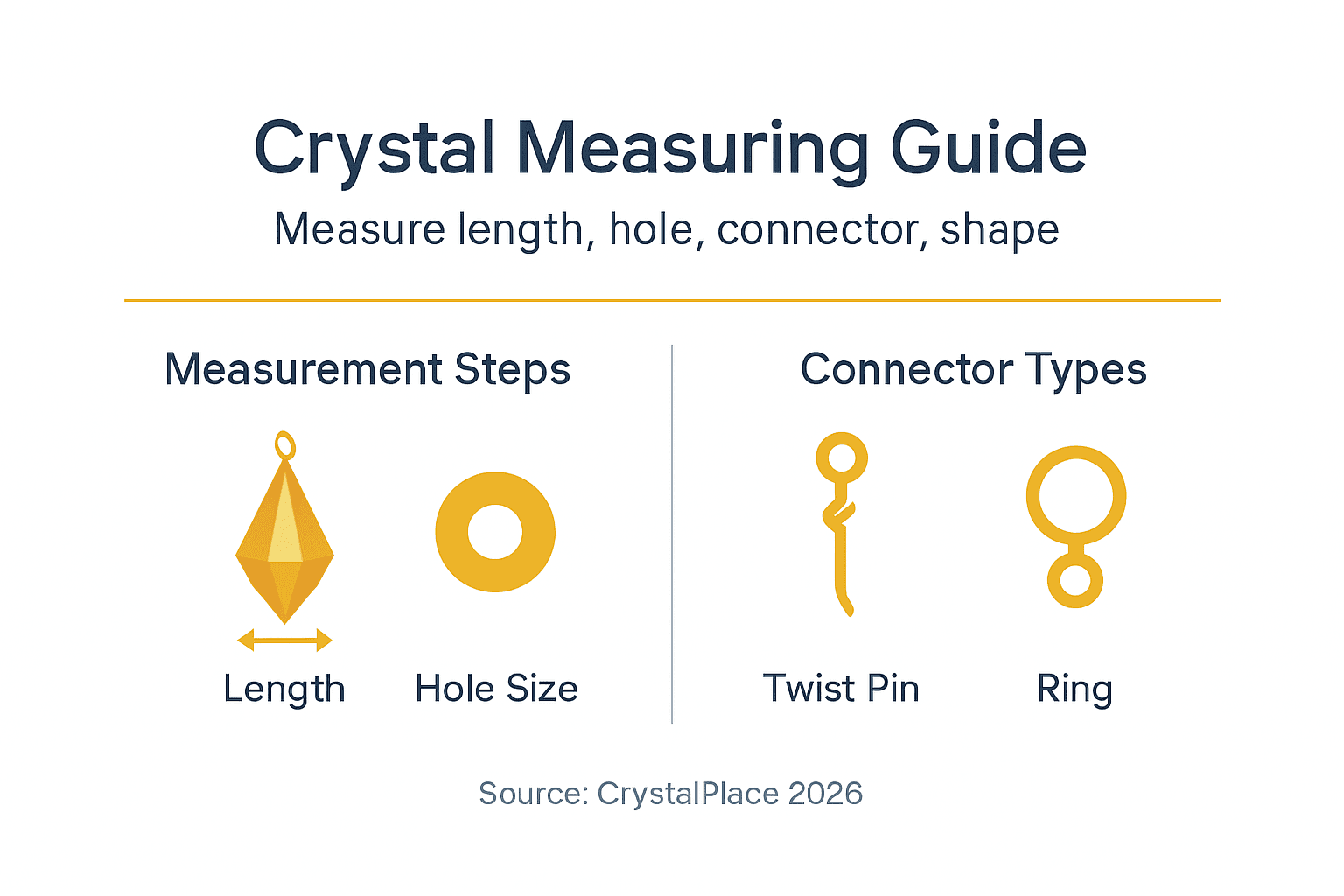
Hole size and orientation matter just as much as length. Measure the diameter of the mounting hole at the crystal’s top using calipers or a drill bit gauge. Note whether the hole runs vertically through the crystal or horizontally across it. Some crystals have two holes, so document both positions and sizes. Shape matters too: round holes accommodate pins and rings, while slotted holes work with octagon chains.
Identifying your connector style prevents ordering incompatible replacements. The three main types are twist pins that screw into threaded holes, jump rings that loop through holes and close with pliers, and octagon chains with metal links that slide through slots. Examine how your existing crystals attach to the chandelier frame and document this information.
Record all measurements immediately to avoid confusion. Write down crystal length, hole diameter, hole orientation, connector type, and crystal shape for each position on your chandelier. Many fixtures use different crystal sizes in tiers or arms, so label measurements by location. Refer to how to measure chandelier crystals guidance when documenting complex fixtures with multiple crystal types.
Pro Tip: Create a simple diagram showing each tier of your chandelier with measurements noted beside each position. This visual reference makes ordering exact quantities and sizes foolproof.
Matching Crystal Shapes and Connection Styles
Crystal shape affects how light refracts and determines your chandelier’s overall aesthetic. Common shapes include straight prisms with parallel sides, pendalogues with pointed bottoms and faceted sides, octagons with eight flat surfaces, and teardrops with rounded bottoms. Each shape creates distinct light patterns, so mixing shapes disrupts visual harmony.
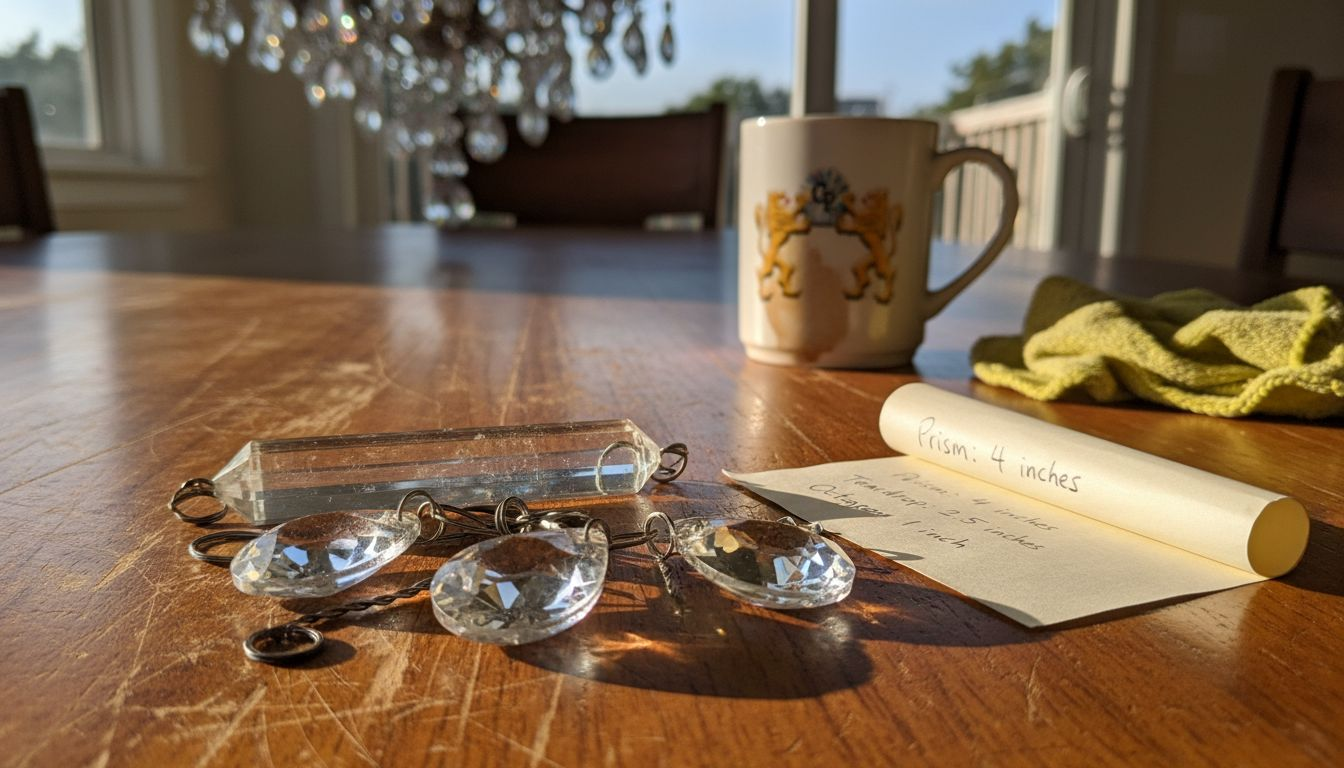
Connection compatibility ensures crystals attach securely without wobbling or falling. Twist pins feature threaded posts that screw into crystals with matching threads, offering excellent stability for heavier pieces. Jump rings are split metal loops that open with pliers, slide through crystal holes, then close around chandelier arms or chains. Octagon chains use rectangular metal links that thread through slotted holes in octagon-shaped crystals.
Using mismatched crystal shapes affects light refraction and fixture appearance because different facet patterns scatter light inconsistently. A chandelier mixing prisms and teardrops looks cobbled together rather than intentionally designed. Similarly, forcing a jump ring connection where a pin should go creates loose hanging that damages both crystal and fixture over time.
| Connection Type | Installation Ease | Stability | Best For |
|---|---|---|---|
| Twist Pin | Moderate | Excellent | Heavy pendants, secure mounting |
| Jump Ring | Easy | Good | Lightweight prisms, quick replacement |
| Octagon Chain | Difficult | Good | Traditional fixtures, octagon crystals |
Matching shapes and connectors exactly maintains your chandelier’s original design intent. If one prism broke, replace it with an identical prism using the same pin type. Upgrading connection styles requires changing hardware across all crystals in that tier to maintain uniformity. Visit resources on chandelier crystal connector types to identify your existing system before ordering replacements.
Cleaning and Handling Crystals Safely
Proper cleaning restores brilliance without damaging delicate crystal surfaces. 65% of crystal chandeliers lose brilliance due to improper cleaning with harsh chemicals like ammonia-based window cleaners or acidic solutions that etch facets. Instead, use pH-neutral, ammonia-free cleaning solutions specifically formulated for crystal or mix a gentle solution of lukewarm water with a few drops of mild dish soap.
Handling technique matters as much as cleaning solution. Always wear lint-free cotton gloves when touching crystals to prevent skin oils from transferring to surfaces. Oils attract dust and create smudges that dull sparkle. Hold each crystal by its edges rather than flat surfaces to minimize contact area. Work over a padded surface in case you drop a piece.
Cleaning methodology preserves crystal clarity for years. Dip a soft microfiber cloth into your cleaning solution and wring it nearly dry. Gently wipe each facet using straight strokes rather than circular motions that can leave swirl marks. Immediately dry with a separate lint-free cloth to prevent water spots. For intricate pieces with hard-to-reach facets, consider professional cleaning services that use specialized tools.
Complex or vintage fixtures with fragile crystals or antique metal frames benefit from expert care. Professional chandelier cleaners understand how different crystal types and metal finishes react to various cleaning agents. They have equipment to clean fixtures in place without removal, reducing breakage risk. For DIY approaches, review safe crystal cleaning methods to match your fixture’s specific needs.
Pro Tip: Clean crystals one tier at a time rather than removing everything at once. This prevents confusion about which crystal goes where and reduces the chance of mixing up different sizes or shapes during reinstallation.
Step-by-Step Installation Guide
Electrical safety comes first. Turn off the circuit breaker controlling your chandelier and verify zero power using your voltage tester at the fixture. Never rely solely on the wall switch because switches can fail or control only some circuits. Test both the light socket connections and any exposed wiring before proceeding.
Removing old or damaged crystals requires careful attention to connection points. Following a sequence of frame check, hardware prep, then crystal hanging reduces breakage and fixture stress throughout the process. Gently open jump rings with pliers by twisting ends apart rather than pulling outward, which weakens the metal. Unscrew twist pins counterclockwise while supporting the crystal with your other hand. Keep removed hardware organized by location.
Installation Steps:
- Inspect chandelier frame and arms for damage, loose screws, or bent mounting points needing repair before adding new crystals.
- Verify frame stability by gently shaking arms to ensure secure attachment to the central support structure.
- Attach all necessary hardware first: screw in twist pin receivers, open jump rings for placement, or position octagon chain hooks.
- Begin hanging crystals from the top tier downward to prevent reaching through already-installed pieces that could break.
- Work systematically around each tier rather than randomly placing crystals to maintain balanced weight distribution.
- Check that each crystal hangs straight and secure before moving to the next position.
- Step back frequently to view the entire fixture and verify even spacing and alignment across all tiers.
Preparation Tips:
- Sort replacement crystals by size and shape before starting installation to avoid confusion.
- Place small containers near your work area to hold different hardware types separately.
- Keep your reference photos visible to confirm correct crystal placement patterns.
- Have extra hardware on hand in case pieces fall or get lost during installation.
Inspecting final results prevents future problems. Gently tug each crystal to confirm secure attachment. Look at the chandelier from multiple angles to spot any hanging unevenly or at wrong angles. Turn the power back on and observe how light refracts through the crystals to identify any obvious mismatches. Detailed guidance on step-by-step chandelier crystal installation helps troubleshoot specific fixture types.
Common Mistakes and How to Avoid Them
Measurement errors create the most frequent installation problems. Incorrect measurements cause uneven hanging in 30% of DIY attempts when hole sizes or crystal lengths don’t match original specifications. Always measure twice and order samples if uncertain about size. Use proper tools like calipers rather than estimating by eye or using flexible measuring tape that can stretch.
Shape and connector mismatches ruin fixture aesthetics and stability. Installing a teardrop crystal where a prism should go disrupts light patterns across the entire chandelier. Using a jump ring on a crystal designed for pin connection creates loose, noisy hanging that damages both parts. Match every specification exactly: shape, size, hole configuration, and connector type. Consult common chandelier crystal replacement mistakes resources to identify compatibility before purchasing.
Safety shortcuts lead to injuries and property damage. Skipping the voltage tester risks electrocution even when you believe power is off. Working without gloves leaves fingerprints that attract dust and exposes hands to sharp crystal edges. Failing to secure your ladder properly causes falls that damage both you and your fixture. Always use complete safety equipment and follow every precaution regardless of how simple the job seems.
Cleaning product mistakes permanently damage crystals. Ammonia-based cleaners etch facets, creating cloudy spots that never polish out. Abrasive scrubbing pads scratch surfaces, destroying the smooth finish that creates sparkle. Acidic solutions dissolve lead content in leaded crystal, weakening structural integrity. Stick to pH-neutral products recommended specifically for crystal care or mix your own gentle soap solution.
Mistake Prevention Checklist:
- Measure each crystal dimension including hole size with proper tools before ordering replacements.
- Photograph connector types and crystal positions from multiple angles as reference.
- Test circuit power with a voltage tester, never assume the switch controls all power.
- Wear lint-free gloves throughout handling to prevent fingerprints and protect hands.
- Use only pH-neutral, ammonia-free cleaning solutions designed for crystal surfaces.
- Sort all hardware and crystals by type and position before starting installation.
- Work slowly and systematically rather than rushing through steps to meet a deadline.
Expected Results and Success Metrics
Visual alignment confirms proper installation. All crystals in each tier should hang with their bottom points or edges forming a straight, level line when viewed from any angle. No crystal should hang noticeably higher, lower, or at a different angle than its neighbors. Sparkle should appear uniform across the fixture without dark or dull spots indicating misaligned or damaged pieces.
Physical security testing verifies safe attachment. Gently tug each crystal to confirm it does not slide, rotate, or separate from its connection point. Jump rings should close completely with no gaps. Twist pins should thread fully without wobbling. Hardware should show no signs of bending or stress that could lead to failure.
Long-term clarity indicates successful cleaning and handling. Crystal surfaces remain clear and bright for at least 6 months after proper handling and cleaning when maintained correctly. No etching, clouding, or discoloration should develop from exposure to light or normal environmental conditions. Regular gentle dusting keeps surfaces pristine between deep cleanings.
Structural integrity protects your investment and safety. Load-bearing mounts, including the ceiling attachment and chandelier frame joints, should support at least 1.5 to 2 times the fixture’s total weight including all crystals. Any creaking, swaying, or visible stress on mounting hardware indicates inadequate support requiring professional reinforcement before continuing use.
Success Verification:
- Stand directly under the chandelier and verify all crystals hang at consistent angles and spacing.
- View the fixture from across the room to confirm uniform sparkle without dark or dull sections.
- Perform gentle tug tests on multiple crystals per tier to verify secure attachment.
- Turn lights on and off multiple times while watching for any movement or noise from crystals.
- Schedule routine inspections every three months to catch and address any loosening hardware early.
Maintaining results requires ongoing care. Dust crystals monthly with a soft, dry microfiber cloth or use compressed air to blow dust from hard-to-reach facets. Deep clean annually using proper techniques and solutions. Address any loose connections immediately rather than waiting for crystals to fall. Consult a checklist for chandelier crystal replacement success to track maintenance tasks and preserve your restoration work.
Elevate Your Space with Premium Chandelier Crystals from CrystalPlace
Restoring your chandelier’s brilliance becomes effortless when you source authentic replacement crystals from trusted suppliers. CrystalPlace specializes in genuine Swarovski and leaded crystal replacements with detailed specifications that match your measurements perfectly.

Find exact shape, size, and connector matches through comprehensive product catalogs organized by crystal type and fixture style. Browse selections of premium crystal prisms and complete chandelier replacement parts to simplify your project from measurement through final installation. Free shipping on orders over $22 within the USA and expert support since 1991 ensure you receive professional-grade components that enhance your chandelier’s longevity and sparkle. Visit CrystalPlace today to transform your fixture with confidence.
FAQ
What tools do I need to replace chandelier crystals safely?
You need a sturdy ladder, needle-nose pliers, voltage tester, lint-free gloves, and soft cleaning cloths. The voltage tester confirms electrical safety before you touch any fixture components. Gloves protect crystals from fingerprint oils and your hands from sharp edges.
How do I measure chandelier crystals to ensure the right fit?
Measure crystal length from top to bottom excluding the connection hole using a ruler or caliper. Check hole diameter with calipers or a drill bit gauge, noting orientation and whether holes run vertically or horizontally. Document connector type such as pin, ring, or chain to ensure compatibility.
What is the safest way to clean chandelier crystals?
Use pH-neutral, ammonia-free cleaning solutions mixed with lukewarm water and mild dish soap. Wipe each facet gently with a nearly-dry microfiber cloth using straight strokes, then immediately dry with a separate lint-free cloth. Avoid ammonia-based or acidic cleaners that etch crystal surfaces permanently.
How can I avoid common mistakes when replacing chandelier crystals?
Double-check all measurements including hole size and crystal length before ordering replacements. Match crystal shapes and connector types exactly to maintain fixture uniformity. Always turn off power at the circuit breaker and verify with a voltage tester before starting work. Wear proper safety gear including gloves throughout the entire process.
How do I know if my chandelier crystal replacement was successful?
Crystals should hang evenly with bottom edges aligned in straight lines across each tier. Gentle tugging confirms secure attachment with no movement or gaps in connections. Sparkle appears uniform without dull spots, and crystal clarity remains bright for at least six months with proper maintenance. All hardware shows no signs of stress or bending under normal use.
Recommended
- Replace Chandelier Crystals Without Guesswork – CrystalPlace
- Real Crystals, Chandelier Crystal Replacements – CrystalPlace
- How to Repair Chandelier Crystals for Flawless Shine – CrystalPlace
- Crystal Chandelier Replacement Crystals for Your chandelier – CrystalPlace