

Discover the crystal ornament definition: what makes them unique and how they enhance your space with vibrant light and beauty.
TL;DR:
- Crystal ornaments are high-refractive glass objects crafted to produce vivid sparkle and prismatic light effects. They serve as versatile, meaningful decor beyond holidays, enhancing lighting and ambiance in homes or events. Proper handling, placement, and intentional display amplify their visual and emotional impact.
Crystal ornaments get misidentified constantly. People call them “fancy glass,” toss them in with generic holiday decorations, or assume they hold mystical powers. None of that is accurate. A crystal ornament definition, properly understood, covers a specific category of decorative object made from glass with a high refractive index, precisely cut or molded to maximize light play. These pieces show up on Christmas trees, hanging in windows, dangling from chandeliers, and arranged on shelves year-round. They are not just pretty. They are functional objects that transform light, define spaces, and carry genuine cultural weight.
Key takeaways
| Point | Details |
|---|---|
| Crystal differs from glass | Crystal has a higher refractive index (1.6 to 1.7), producing more vivid sparkle than standard glass. |
| Multiple production methods exist | Hand-cut, molded, and blown crystal each create different levels of brilliance and price points. |
| Decorative crystal ornaments affect lighting | Crystal refracts light into prismatic rainbow effects, making rooms feel brighter and more elegant. |
| Modern formulas are lead-free | Today’s eco-crystal options replicate traditional sparkle without lead oxide, increasing safety and accessibility. |
| Ornaments work beyond seasonal use | Crystal ornaments serve gifting, collecting, and year-round home decor, not just holiday display. |
Crystal ornament definition: materials, sparkle, and what sets them apart
At its core, a crystal ornament is a decorative object crafted from lead glass or lead-free crystal glass, shaped and finished to refract visible light into brilliant, prismatic displays. The word “crystal” here does not mean naturally occurring mineral crystal. It refers to a glass formula engineered with additives that dramatically increase clarity and light-bending ability.
Traditional crystal used lead oxide as the key additive, typically between 24% and 30% by weight. That formula produced the dense, heavy, ultra-clear material associated with fine European glassmakers. Today, lead-free eco-crystal formulas replicate that sparkle using barium oxide, zinc oxide, or titanium, making the material safer to handle and more affordable to produce without sacrificing brilliance.
Why crystal sparkles more than glass
The physics here are straightforward. Crystal’s refractive index sits between 1.6 and 1.7, compared to standard glass at around 1.5. A higher refractive index means the material bends incoming light more sharply. When light bends at different angles through each facet of a cut crystal ornament, it splits into its component colors. That splitting is what creates the rainbow effect and the intense sparkle you see from quality crystal pieces.
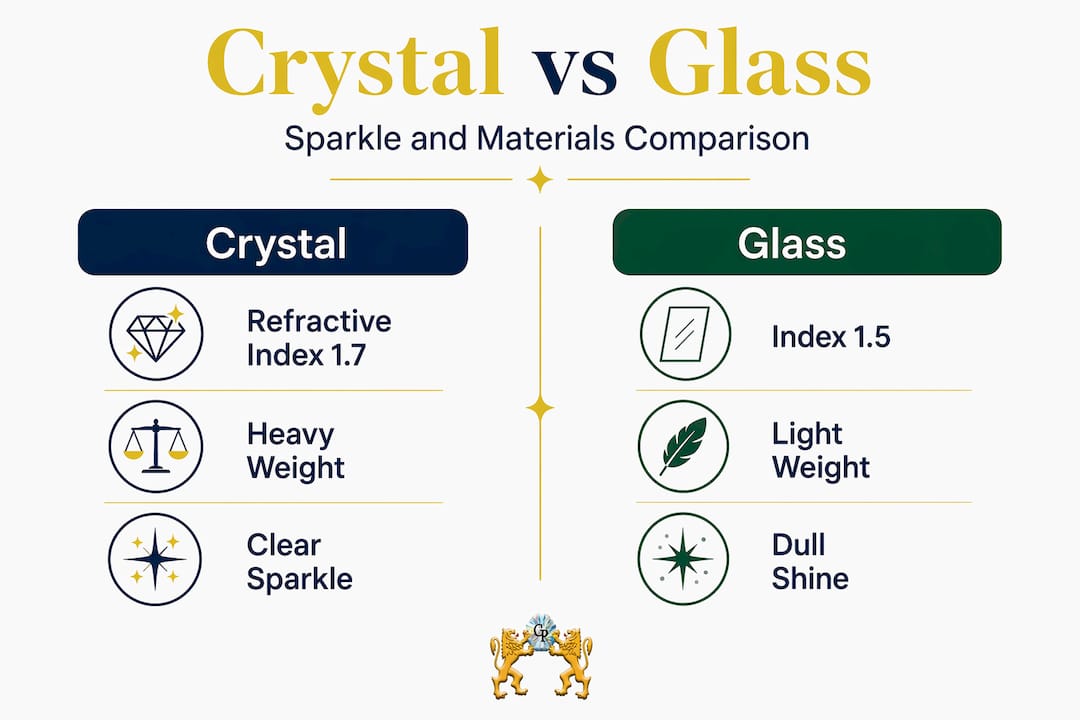
Hand-cut crystal ornaments with precisely crafted facets function as miniature light sculptures. Each flat, polished surface redirects light in a calculated direction. Mass-molded pieces produce a softer effect because the facets are less precise, but they still outperform standard glass in brilliance.
How to tell genuine crystal from glass
This matters when you are buying decorative crystal ornaments and want to get what you pay for. Four simple tests separate real crystal from imitations: weight, clarity, sound, and maker’s marks. Crystal feels noticeably heavier than glass of the same size. It looks more transparent with sharper internal reflections. When you tap it lightly, it produces a clear, bell-like ring rather than a dull thud. And quality makers like Swarovski etch their signature or logo directly into the piece.
Pro Tip: Hold a piece up to a single light source before buying. Genuine crystal produces multiple distinct color separations. Glass produces a blurry glow with no defined rainbow.
| Feature | Crystal | Standard glass |
|---|---|---|
| Refractive index | 1.6 to 1.7 | Around 1.5 |
| Weight | Heavier | Lighter |
| Sound when tapped | Clear ring | Dull thud |
| Sparkle quality | Vivid, prismatic | Soft, diffused |
| Maker’s marks | Often etched | Rarely present |
Types of crystal ornaments and how they are used
Crystal ornaments come in far more forms than the classic round ball. Understanding the range helps you pick the right piece for your specific purpose, whether that is seasonal decorating, permanent display, or gifting.
The most recognizable types of crystal ornaments include:
- Cut-glass balls: Spheres with faceted surfaces that scatter light in multiple directions. These work equally well on trees, in bowls, or hung near windows.
- Snowflake prisms: Six-pointed or geometric designs that cast rainbow patterns when light passes through. They are especially effective as window hangings.
- Crystal drops and teardrops: Elongated forms popular in chandelier design and pendant-style home decor.
- Hand-blown ornaments: These feature thinner glass walls with internal color patterns created by the glassblower’s breath and technique. They prioritize visual texture over pure sparkle.
- Collectible figurines: Three-dimensional sculpted pieces representing animals, seasonal themes, or abstract forms.
Swarovski has produced annual Christmas-themed ornaments since 1995, building a collector culture around limited edition releases that span nearly three decades. These pieces often appreciate in value over time, making them genuinely functional as both decoration and long-term keepsakes.
The meaning of crystal ornament goes well beyond holiday use. People incorporate them into wedding decor, use them as everyday window treatments, gift them to mark milestones, and build entire interior design themes around their light-catching qualities. Their emotional resonance comes from both their beauty and the tradition attached to receiving or gifting a piece that is made to last.
How crystal ornaments enhance home decor and lighting
This is where the crystal ornament definition moves from material description to real-world impact. The decorative power of crystal ornaments comes from how they interact with your existing light sources, whether natural sunlight or interior lighting.
Here is how to use them intentionally for maximum effect:
- Place prisms and snowflake ornaments in south-facing windows. Direct sunlight through a hanging crystal produces the most dramatic rainbow projections on walls and ceilings, especially during morning and afternoon hours.
- Layer crystal ornaments near warm light sources. Incandescent and warm LED bulbs pull amber and gold tones from crystal, creating a softer, more luxurious glow compared to cool daylight.
- Group cut-glass balls in reflective vessels. A glass bowl filled with crystal ornaments near a lamp amplifies both the lamp’s output and the prismatic effect, working like a light multiplier.
- Hang crystal drops in dining areas. Crystal ornaments enhance perceived brightness by adding prismatic effects that make a space feel more polished. A few well-placed drops near a dining table can elevate the atmosphere of an ordinary meal.
- Use crystal suncatchers as year-round decor. Unlike tree ornaments, suncatchers are designed specifically for window placement and work in every season. They serve as mood-transforming light tools that shift as the sun moves.
Pro Tip: Avoid placing crystal ornaments directly against walls or in corners away from light sources. Crystal only performs when light can pass through or reflect off its surfaces. Distance from a window or lamp dramatically reduces the effect.
The emotional benefit of decorative crystal ornaments is documented beyond aesthetics. Light in a space directly affects mood, and the moving, colorful light from crystal carries a particular quality. It feels alive in a way that static decor simply does not.

Common misconceptions about crystal ornaments
The meaning of crystal ornament gets distorted by two competing myths. One undersells them as simple decorations with no significance. The other oversells them as objects with magical, reality-altering powers.
Here is what the research actually shows about those claims:
- Myth: Crystal ornaments have magical powers. Crystal ornaments support emotional balance through mindful use, not supernatural energy. They function as psychological anchors, not magic objects.
- Myth: Crystal is just fancy glass. The physical composition, weight, refractive index, and production technique are meaningfully different from standard glass. This is not a marketing distinction. It is a material one.
- Myth: Crystal ornaments are only for Christmas. Crystal ornament uses span seasonal display, daily home decor, event styling, chandelier components, and collectible investment. The Christmas association comes from tradition, not design limitation.
- Reality: Symbolism is culturally real. Crystal has been associated with clarity, celebration, and purity across multiple cultures for centuries. That symbolic weight makes it a natural choice for marking important moments.
“Crystal ornaments represent centuries of craftsmanship and the human pursuit of beauty. Each facet tells a story connecting tradition and artistry.” Crystal & Cut-Glass Christmas Ornaments: Complete Guide
The psychological framing matters. If you use crystal ornaments mindfully with positive intention, they become more meaningful to you. That is not magic. That is how humans assign value and create ritual around objects.
How to select, care for, and display crystal ornaments
Knowing the crystal ornament definition is one thing. Putting that knowledge to work when you are buying, maintaining, and styling these pieces is where it pays off.
Follow these steps to get the most from your crystal ornaments:
- Buy from verified sources. Look for maker’s marks, brand certifications, and product descriptions that specify the crystal type. Authentic Swarovski and comparable quality pieces will always disclose their composition.
- Handle with clean, dry hands or cotton gloves. The oils on your skin leave fingerprints on crystal surfaces that dull sparkle over time. This matters especially for display pieces you touch often.
- Clean with distilled water and a microfiber cloth. Avoid ammonia-based cleaners, which strip surface coatings and can damage decorative finishes. Distilled water prevents mineral deposits that create cloudiness.
- Store in individual soft pouches or boxes. Crystal pieces scratch each other when stored loose together. Separation is the simplest way to preserve clarity and surface finish between display seasons.
- Rotate your display seasonally. Even if you love crystal ornaments year-round, rotating pieces keeps your decor fresh and reduces UV exposure that can affect colored crystal over time.
Pro Tip: If you are shopping for crystal ornament decorating ideas and are not sure where to start, pick one focal point in your home — a window, a mantle, or a dining table — and build from there. Three to five quality pieces in one location create more impact than fifteen scattered around a room.
The selection process also benefits from thinking about your light sources first. A north-facing room with limited sunlight needs crystal that performs well under artificial light. South-facing spaces with generous sunlight can handle almost any crystal form beautifully.
My honest take on crystal ornaments after years of watching them work
I’ve spent years looking at how crystal ornaments actually function in real home environments, not just in styled photography or curated showrooms. And the thing most people miss is this: crystal ornaments are not background decor. They are active participants in a room.
What I’ve seen again and again is that people buy one or two pieces, place them in mediocre positions, and then wonder why they do not get the dramatic effect they expected. The ornament is not the problem. Light placement is. Once you understand that crystal works by moving light, not just catching it, you start making completely different decisions about where and how you display them.
I’ve also noticed that the shift from lead crystal to modern lead-free formulas has genuinely expanded who can enjoy this category. Pieces that once required a significant budget are now accessible at multiple price points, without meaningful loss of sparkle quality. That is a real development, not marketing spin.
What still separates the best crystal ornaments from the rest is craftsmanship. Hand-cut pieces do something that molded pieces simply cannot replicate at scale. Each facet catches light from a slightly different angle. The result is a livelier, more dynamic display that changes as you move around it. If you are going to invest in a piece you will keep for decades, hand-cut is worth the additional cost.
— BCC
Explore Crystalplace for authentic crystal ornaments
Crystalplace has been sourcing and selling authentic crystal products directly from top manufacturers since 1992. If you are ready to move beyond generic decorations and bring genuine crystal into your home, this is where experienced buyers go.
At Crystalplace, you will find Swarovski crystal ornaments alongside a full selection of prisms, suncatchers, hanging crystals, and chandelier components. Every product is sourced for verified quality and brilliance. Free shipping applies to all USA orders over $22, and the catalog spans pieces suited to every home style and budget. Whether you want a single statement piece or a full lighting transformation, the Crystalplace collection gives you genuine crystal craftsmanship without the guesswork.
FAQ
What is the crystal ornament definition?
A crystal ornament is a decorative object made from high-refractive-index glass, either lead-based or lead-free, shaped and finished to refract light into prismatic patterns. The term covers a wide range of forms including balls, prisms, snowflakes, and figurines used in home decor and seasonal display.
How do crystal ornaments differ from regular glass ornaments?
Crystal has a refractive index of 1.6 to 1.7 versus standard glass at around 1.5, producing noticeably sharper, more colorful sparkle. Crystal also feels heavier and produces a clear ringing sound when tapped.
What are the main crystal ornament uses?
Crystal ornament uses include seasonal decoration, year-round home decor, chandelier components, window suncatchers, event styling, and collectible gifting. They work in both permanent installations and rotating seasonal displays.
Do decorative crystal ornaments have any symbolic meaning?
Decorative crystal ornaments carry cultural associations with clarity, celebration, and purity across many traditions. While they do not have magical properties, using them with personal intention makes them meaningful anchors in your living space.
How should I care for crystal ornaments to maintain their sparkle?
Clean crystal ornaments with distilled water and a microfiber cloth, and avoid ammonia-based products that damage surface coatings. Store them in individual soft pouches to prevent scratching between display seasons.
Recommended
- Crystal ornaments: types, sparkle, and home decor uses – CrystalPlace
- Crystal Ornaments That Make Rooms Feel Luminous – CrystalPlace
- Elegant crystal ornaments: Stunning examples for home décor – CrystalPlace
- How crystal ornaments elevate lighting and home décor – CrystalPlace