

Discover how to select high-quality chandelier crystals with expert guidance on Swarovski, glass, and acrylic options. Learn cut styles, authentication tips, and compatibility factors to confidently choose crystals that elevate your lighting brilliance.
Choosing chandelier crystals can feel overwhelming when you face countless options and unclear quality indicators. The right selection dramatically transforms your lighting aesthetics, but understanding material types, cut styles, and compatibility requires clear guidance. This article provides concrete criteria and popular crystal examples to help you confidently select high-quality crystals that elevate your residential or commercial spaces with stunning brilliance and lasting value.
Key takeaways
| Point | Details |
|---|---|
| Material quality drives brilliance | Crystal material and cut precision directly impact light refraction, sparkle intensity, and long-term durability. |
| Swarovski offers premium clarity | Authentic Swarovski crystals deliver superior sparkle with precise faceting but command higher prices than alternatives. |
| Glass balances quality and cost | Glass crystals provide excellent clarity and light dispersion, making them ideal for mid-range chandelier projects. |
| Acrylic suits budget and durability needs | Acrylic crystals offer shatter resistance and affordability, perfect for high-traffic commercial environments. |
| Match crystals to fixture specifications | Select crystal size, weight, and style based on chandelier frame capacity and design theme for safe, cohesive results. |
How to choose the right chandelier crystals: selection criteria
Selecting chandelier crystals requires evaluating several critical factors that determine both aesthetic impact and practical performance. Material quality stands as the foundation of your choice, directly affecting how light refracts through the crystal and how long the crystals maintain their brilliance. Authentic materials like lead crystal or Swarovski glass contain specific mineral compositions that maximize light dispersion, while lower-quality alternatives may yellow or cloud over time.
Crystal cut style and facet count dramatically influence sparkle intensity. More facets create additional surfaces for light to bounce and refract, producing that signature chandelier sparkle. Popular cuts include octagon, teardrop, and prism shapes, each offering distinct visual effects and compatibility with different chandelier designs. Understanding chandelier crystal color selection helps you coordinate hues with your room’s color scheme and desired ambiance.
Size compatibility matters more than many realize. Oversized crystals can overload chandelier frames not designed for heavy loads, risking damage or imbalanced hanging. Measure your fixture’s arms and existing crystal attachment points before purchasing replacements. You need crystals that fit securely without stressing connection points or requiring excessive hardware modifications.
Durability and maintenance requirements vary widely across crystal types. Premium crystals demand regular cleaning to maintain sparkle but reward you with decades of brilliance. Budget options may require less careful handling but could need earlier replacement. Consider how much time you can dedicate to maintenance and whether your installation location experiences high humidity or temperature fluctuations that might affect crystal clarity.
Price directly correlates with quality in chandelier crystals, though smart shopping can uncover excellent value. Balancing your budget against desired lighting effects requires understanding which features matter most for your specific project. Selecting the right chandelier crystal types becomes easier when you know which quality factors justify higher costs and which represent unnecessary premiums.
Pro Tip: Always request samples before bulk ordering crystals for large chandeliers. Seeing how light plays through actual crystals in your specific lighting conditions prevents costly mistakes and ensures you achieve your desired sparkle intensity.
Popular chandelier crystal types: Swarovski, glass, and acrylic
Swarovski crystals represent the premium tier of chandelier crystals, engineered with precise lead content and cutting techniques that maximize light refraction. These Austrian-made crystals undergo strict quality control, ensuring every piece meets exact specifications for clarity and facet alignment. Studies show 80% of consumers prefer Swarovski crystals over glass in blind sparkle tests, validating their reputation for superior brilliance. The premium price point reflects this quality, with Swarovski crystals typically costing 30 to 50 percent more than comparable glass alternatives.
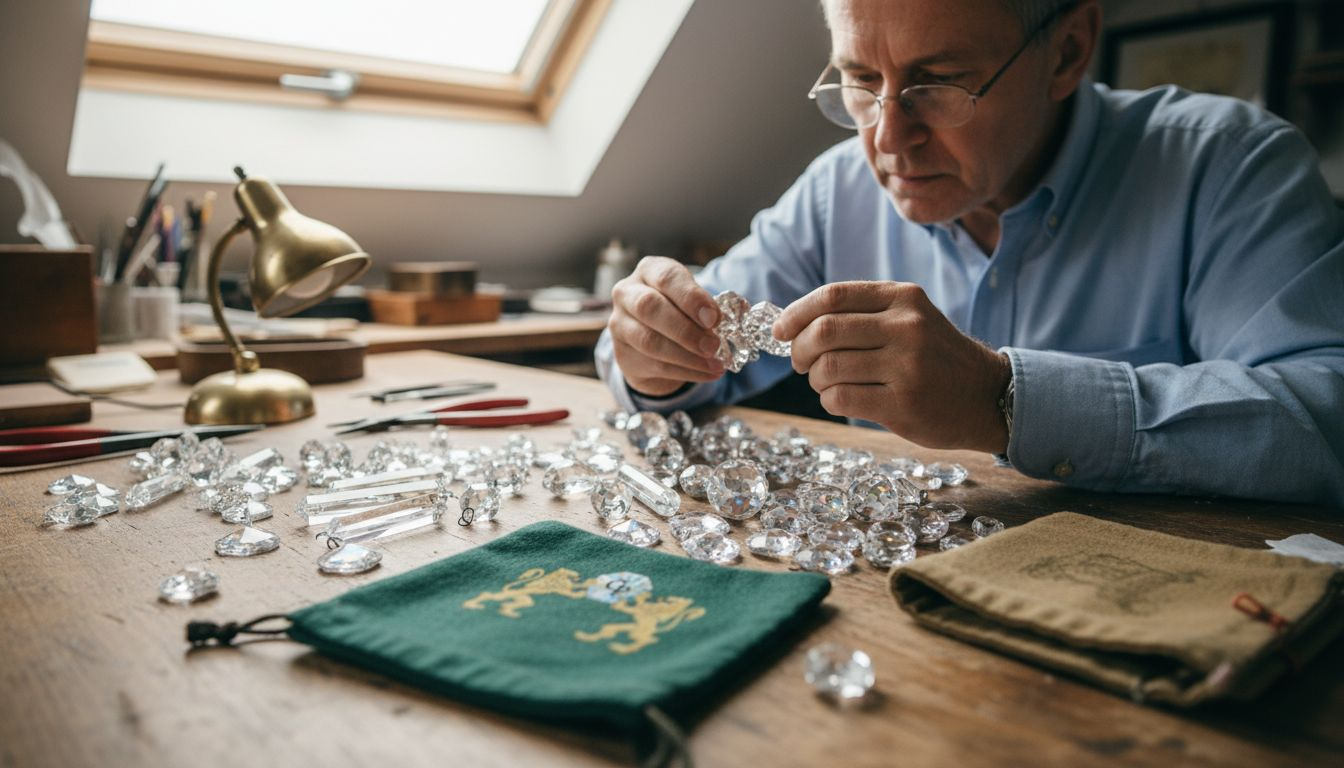
Glass crystals occupy the middle ground, offering excellent clarity and light dispersion at more accessible price points. Quality glass crystals contain lead oxide that enhances refractive properties, though usually in lower concentrations than Swarovski formulations. They work beautifully in residential dining rooms, entryways, and mid-range commercial installations where you want impressive sparkle without luxury-tier investment. Most glass crystals maintain their clarity for 15 to 20 years with proper care and cleaning.
Acrylic crystals solve specific problems that glass and Swarovski cannot address as effectively. Their shatter-resistant construction makes them ideal for high-traffic commercial areas, homes with children, or outdoor-protected chandeliers where breakage risk runs high. While acrylic produces less intense sparkle due to lower refractive index, modern manufacturing has dramatically improved their appearance. They weigh significantly less than glass, reducing strain on chandelier frames and simplifying installation.
Choosing among these materials requires honest assessment of your priorities:
- Budget constraints and willingness to invest in premium materials
- Desired sparkle intensity and lighting ambiance goals
- Installation environment and breakage risk factors
- Maintenance capacity and cleaning commitment level
- Expected lifespan and replacement timeline
Material choice ripples through your entire chandelier experience. Swarovski crystals demand careful handling but deliver unmatched brilliance that transforms rooms. Glass crystals provide the sweet spot for most residential projects, balancing beauty with practicality. Acrylic crystals excel in situations where durability trumps maximum sparkle, offering peace of mind in challenging environments.
Understanding what crystals are used in chandeliers helps you identify which material best matches your fixture’s style and your performance expectations. Consider starting with glass crystals if you’re unsure, then upgrading to Swarovski for focal chandeliers where maximum impact justifies the investment. For replacement projects, reviewing real crystal chandelier replacement options ensures you match or improve upon your existing crystals.
Crystal cut styles and their effects on lighting
Crystal cut geometry determines exactly how light enters, bounces internally, and exits each crystal to create sparkle patterns throughout your room. The most common crystal cuts include octagon, teardrop, and prism, each affecting how light refracts and disperses in unique ways that complement different chandelier styles and room functions.
Octagon cuts feature eight precisely angled facets that create balanced light dispersion without overwhelming visual complexity. These classic cuts work beautifully in traditional chandeliers where you want elegant sparkle that doesn’t compete with ornate metalwork or vintage design elements. The eight-facet configuration provides enough surface variety to catch light from multiple angles while maintaining clean, geometric aesthetics that age gracefully.
Teardrop cuts combine elongated shapes with approximately 14 facets, creating sophisticated sparkle that draws the eye vertically. These cuts add graceful movement to chandeliers, especially when suspended on chains or wires that allow slight rotation. The additional facets compared to octagon cuts intensify sparkle while the teardrop shape contributes softness that balances angular chandelier frames. They excel in transitional designs that blend traditional and contemporary elements.
Prism cuts maximize light dispersion through multi-faceted surfaces that can feature 20 or more precisely cut planes. These cuts produce the most dramatic sparkle effects, throwing rainbow patterns across walls and ceilings when sunlight or bright bulbs hit them. Modern and contemporary chandeliers often showcase prism cuts to create bold visual statements that serve as room focal points. The intense sparkle works best in spaces where you want lighting to make a dramatic impact.
| Cut Style | Facet Count | Light Effect | Best For |
|---|---|---|---|
| Octagon | 8 facets | Balanced, elegant dispersion | Traditional designs |
| Teardrop | 14 facets | Vertical sparkle with movement | Transitional styles |
| Prism | 20+ facets | Maximum rainbow dispersion | Modern statements |
| Pendalogue | 10-12 facets | Soft, diffused sparkle | Classic chandeliers |
Facet count directly correlates with sparkle intensity but also affects cleaning difficulty and cost. More facets mean more surfaces that collect dust and require careful maintenance. Balance your desire for maximum brilliance against your realistic cleaning schedule. Learning how to match chandelier crystal shapes ensures your chosen cut style harmonizes with your fixture’s overall design language.
Pro Tip: Mix cut styles strategically within a single chandelier to create depth and visual interest. Use prism cuts as focal points on outer tiers while employing simpler octagon cuts in interior positions where they provide sparkle without overwhelming the design.
Price and quality comparisons across crystal types
Understanding the price-to-quality relationship across crystal materials helps you make informed decisions that align budget constraints with aesthetic goals. Swarovski crystals command premium prices justified by superior clarity scores, precise facet alignment, and guaranteed composition standards. These crystals typically cost 30 to 50 percent more than equivalent glass crystals, with individual pieces ranging from $3 to $15 depending on size and complexity.
Glass crystals deliver impressive quality at mid-tier pricing that makes them accessible for most residential projects. Quality glass crystals with proper lead content produce 70 to 85 percent of Swarovski’s sparkle intensity while costing significantly less. Expect to pay $1.50 to $6 per crystal depending on size, cut complexity, and brand reputation. This price point allows you to outfit entire chandeliers without stretching budgets while still achieving beautiful lighting effects.
Acrylic crystals represent the economy tier, with prices ranging from $0.50 to $3 per piece depending on size and manufacturing quality. While clarity and sparkle don’t match glass or Swarovski, modern acrylic formulations have narrowed the gap considerably. The dramatic price advantage allows you to purchase larger quantities or allocate budget to other chandelier components like upgraded frames or specialized bulbs.
| Crystal Type | Clarity Rating | Facet Precision | Price Range | Durability | Best Value For |
|---|---|---|---|---|---|
| Swarovski | Excellent (95-100%) | High | $3-$15 each | High (requires care) | Luxury residential, upscale commercial |
| Glass | Very Good (70-85%) | Medium-High | $1.50-$6 each | Good | Mid-range residential, standard commercial |
| Acrylic | Fair (50-65%) | Medium | $0.50-$3 each | Excellent (shatter-resistant) | Budget projects, high-traffic areas |
Durability considerations extend beyond breakage resistance to include clarity retention over time. Swarovski and quality glass crystals maintain their sparkle for decades with proper cleaning, while lower-quality alternatives may develop cloudiness or yellowing after several years. Factor replacement costs into your long-term budget calculations when choosing materials.
Maintenance requirements scale with quality and price. Premium crystals demand gentler cleaning methods and more frequent attention to preserve their brilliance, while acrylic crystals tolerate more casual care. Reviewing crystal replacement guidance helps you plan for eventual maintenance needs regardless of which material you select initially.
Consider total cost of ownership rather than just upfront prices. A $200 Swarovski crystal investment that sparkles beautifully for 25 years often provides better value than $80 worth of acrylic crystals that need replacement every 7 years and never achieve the same visual impact.
Compatibility with chandelier styles and sizes
Physical compatibility between crystals and chandelier frames prevents damage, ensures safe installation, and creates harmonious visual presentations. Start by checking your chandelier’s weight capacity, typically listed in manufacturer specifications or installation manuals. Vintage frames may not support modern crystal loads if you’re planning significant upgrades, while contemporary fixtures usually accommodate heavier crystal configurations.
Crystal size must scale appropriately with fixture dimensions to avoid visual imbalance. Large crystals on small chandeliers create top-heavy appearances and may interfere with bulb placement or light distribution. Conversely, tiny crystals on substantial fixtures disappear visually and fail to generate expected sparkle. As a general rule, crystal length should not exceed one-third of the distance between chandelier arms to maintain proper proportions.
Design theme compatibility ensures crystals enhance rather than clash with your chandelier’s aesthetic language. Traditional fixtures with ornate metalwork pair beautifully with classic cuts like octagon and teardrop shapes that echo historical design elements. Modern chandeliers with clean lines benefit from geometric prism cuts or simple shapes that reinforce contemporary aesthetics. Mixing incompatible styles creates visual confusion that undermines the entire fixture’s impact.
Installation hardware varies across chandelier designs and crystal types. Some fixtures use pins, others employ rings or clips, and vintage pieces may feature unique attachment methods. Verify that your chosen crystals include compatible connectors or purchase appropriate hardware separately. Forcing incompatible attachment methods risks crystal damage and creates safety hazards if crystals detach unexpectedly.
Key compatibility considerations include:
- Frame weight limits and current load if replacing existing crystals
- Arm length and spacing between crystal attachment points
- Existing crystal connector types and hardware compatibility
- Overall chandelier style and aesthetic requirements
- Clearance space below fixture for hanging crystal lengths
Applying crystal compatibility tips prevents costly mistakes and ensures your crystals integrate seamlessly with existing fixtures. Document current crystal dimensions and connector types before shopping for replacements to streamline the selection process. Following crystal replacement tips helps you navigate the technical aspects of swapping old crystals for new ones without damaging frames or creating safety issues.
Overloading chandeliers with excessive crystal weight creates multiple problems beyond simple structural concerns. Unbalanced weight distribution can cause fixtures to hang crooked, strain ceiling mounting hardware, or stress electrical connections. Start with conservative crystal choices and add more only after confirming your fixture handles the load comfortably.
Authentication of branded crystals: verifying Swarovski authenticity
Counterfeit Swarovski crystals flood the market, making authentication skills essential for protecting your investment and ensuring you receive the quality you’re paying for. Genuine Swarovski crystals feature distinctive hologram stickers on packaging that display the company logo and shift colors when viewed from different angles. These holograms incorporate security features difficult for counterfeiters to replicate accurately, though sophisticated fakes do exist.
Unique product codes provide another authentication layer. Swarovski assigns specific codes to each crystal design, typically printed on packaging or included in documentation. You can verify these codes through authorized dealers or Swarovski’s customer service to confirm authenticity. Packages lacking codes or using generic numbering systems raise immediate red flags about legitimacy.
Physical inspection reveals quality differences between authentic and counterfeit crystals. Genuine Swarovski crystals exhibit flawless clarity with no bubbles, cloudiness, or imperfections visible under bright light. Facet edges appear razor-sharp and precisely aligned, creating perfect geometric patterns. Counterfeits often show slightly rounded facet edges, minor clarity issues, or subtle misalignments that become obvious when compared directly to authentic pieces.
Purchase channels significantly affect authenticity risk. Authorized Swarovski dealers and established crystal specialty retailers offer guarantees and documentation that protect your purchase. Online marketplaces and unfamiliar vendors selling Swarovski crystals at suspiciously low prices often distribute counterfeits, whether knowingly or through their own supply chain compromises. Learning how to spot real Swarovski crystals fast equips you with practical inspection techniques that work in store or upon delivery.
Authentication markers to verify:
- Hologram security stickers with color-shifting Swarovski logos
- Unique product codes matching official Swarovski databases
- Perfect facet alignment and razor-sharp edge precision
- Flawless clarity without bubbles or internal imperfections
- Official packaging with proper branding and documentation
Authentic Swarovski crystals maintain superior resale value compared to counterfeits or generic alternatives. This matters if you later upgrade your chandelier or sell your home with fixtures included. Buyers recognize genuine Swarovski quality and pay premiums accordingly. Ensuring Swarovski chandelier crystals are authentic protects both immediate enjoyment and long-term investment value.
Request certificates of authenticity for large crystal purchases, especially when investing hundreds of dollars in premium materials. Reputable dealers provide documentation willingly and stand behind their products with return policies and guarantees. Hesitation to provide authentication proof signals potential problems worth avoiding.
Situational recommendations: choosing the best crystal for your project
Project-specific factors should drive your crystal selection to ensure optimal results that match your unique needs and constraints. Luxury residential installations in formal dining rooms, grand entryways, or master bedrooms justify Swarovski crystal investments that deliver maximum visual impact. These spaces benefit from superior sparkle that impresses guests and provides daily enjoyment worth the premium cost. The enhanced brilliance transforms ordinary lighting into stunning focal points that elevate entire rooms.
Mid-range residential projects in family homes, apartments, or secondary spaces perform beautifully with quality glass crystals that balance aesthetics and budget. Glass crystals provide sparkle that satisfies most homeowners without requiring luxury-tier spending. They suit living rooms, bedrooms, and kitchens where you want attractive lighting that doesn’t demand the careful maintenance premium crystals require.
High-traffic commercial environments like restaurants, hotels, retail stores, or office lobbies benefit from acrylic crystal durability and cost efficiency. These settings prioritize longevity and safety over maximum sparkle since crystals face constant environmental stress and potential impacts. Acrylic’s shatter resistance prevents dangerous breakage while lower replacement costs make periodic updates affordable when wear becomes visible.
Maintenance willingness dramatically affects material suitability. Premium crystals reward diligent cleaning with lasting brilliance but punish neglect with visible dust and diminished sparkle. Busy households or commercial spaces with limited maintenance staff should consider lower-maintenance options that tolerate less frequent attention. Selecting chandelier crystals for home lighting requires honest assessment of cleaning commitment.
Budget constraints need not prevent beautiful results when you make strategic choices:
- Use Swarovski crystals sparingly as focal accents mixed with glass
- Invest premium budget in visible front-facing crystal positions
- Select acrylic for less prominent chandelier areas or tiers
- Prioritize quality over quantity for maximum visual impact
- Plan upgrades over time rather than compromising on inferior products
Environmental factors influence material performance. Humid bathrooms or kitchens accelerate crystal clouding in lower-quality materials, making premium crystals worthwhile despite higher costs. Outdoor-protected spaces need weather-resistant options that withstand temperature fluctuations and moisture exposure without degrading.
Enhance your chandeliers with premium crystals from CrystalPlace
Transform your lighting with carefully curated chandelier crystals from CrystalPlace, where quality meets selection in an expertly organized catalog. We stock authentic Swarovski crystals, premium glass options, and durable acrylic alternatives to match every project requirement and budget consideration. Our 30-plus years of crystal expertise ensures you receive genuine materials with guaranteed authenticity and proper documentation.
Browse crystal prisms for chandeliers in every popular cut style, from classic octagon shapes to dramatic prism designs that maximize light dispersion. Each product listing includes detailed specifications covering dimensions, facet counts, connector types, and compatibility information that simplifies matching crystals to your specific chandelier. Our team provides personalized guidance for complex projects or custom chandelier designs requiring specialized crystal solutions.
Discover the brilliance of our crystal ornament suncatcher rainbow makers featuring genuine Swarovski crystals that create stunning rainbow effects throughout your space. We offer free shipping on orders over $22 within the USA, making premium crystals more accessible for projects of any scale. Shop today to elevate your chandelier’s sparkle and transform ordinary rooms into extraordinary spaces that shine with timeless elegance.
FAQ
What are the main types of chandelier crystals?
The three primary chandelier crystal types are Swarovski, glass, and acrylic, each offering distinct advantages. Swarovski crystals provide premium clarity and maximum sparkle through precise cutting and superior material composition. Glass crystals deliver excellent light refraction at mid-range prices suitable for most residential projects. Acrylic crystals offer durability and affordability ideal for commercial spaces or budget-conscious installations.
How do I verify if Swarovski crystals are authentic?
Authentic Swarovski crystals feature hologram security stickers with color-shifting logos and unique product codes verifiable through authorized dealers. Inspect crystals under bright light for flawless clarity, razor-sharp facet edges, and perfect geometric alignment that counterfeits cannot replicate. Purchase from authorized dealers who provide authentication documentation and guarantee genuine Swarovski quality.
Which crystal cuts work best for modern chandeliers?
Prism and octagon cuts with higher facet counts enhance light dispersion perfectly suited to modern chandelier aesthetics. Prism cuts create dramatic sparkle effects and bold visual statements that complement contemporary design language. Octagon cuts provide balanced elegance when you prefer cleaner geometric looks. Teardrop cuts suit traditional or transitional chandeliers better through their softer, more classic appeal.
Is acrylic a good choice for commercial chandelier crystals?
Acrylic crystals excel in commercial applications requiring durability, safety, and budget efficiency. Their shatter-resistant construction prevents dangerous breakage in high-traffic areas while lightweight properties reduce installation complexity. Though acrylic provides less sparkle than glass or Swarovski options, it offers unmatched practicality for restaurants, hotels, and retail environments where crystals face constant environmental stress.
Recommended
- Role of Chandelier Crystals: Enhancing Light and Elegance – CrystalPlace
- Chandelier crystals: 40% more sparkle with quality cuts – CrystalPlace
- Choose the right chandelier crystal types for brilliance – CrystalPlace
- Chandelier Crystals: Transforming Home Lighting Elegance – CrystalPlace