
Hanging crystals create brilliance with light, types like prisms or suncatchers, and practical decorating uses. Learn key features and common mistakes.
Finding ways to bring extra sparkle and vibrant light into your home can be a challenge, especially when searching for truly elegant décor. For many American homeowners and interior designers, decorative hanging crystals offer a unique solution that goes beyond simple glass ornaments. By choosing materials with a highly ordered atomic structure, you unlock the power of true crystals to transform light, create rainbow patterns, and add lasting beauty to your spaces. This guide unpacks common misconceptions and highlights what sets real hanging crystals apart, helping you make informed design choices.
Table of Contents
- What Are Hanging Crystals And Common Misconceptions
- Types Of Hanging Crystals For Interior Use
- How Hanging Crystals Enhance Space And Light
- Key Features And Quality Considerations
- Common Mistakes When Using Hanging Crystals
Key Takeaways
| Point | Details |
|---|---|
| Hanging Crystals vs. Glass | Authentic hanging crystals have distinct atomic structures that create effective light refraction, unlike decorative glass objects which only reflect light. |
| Types of Crystals | Choosing the right type, such as natural minerals or lead-free options, enhances both aesthetics and safety in home environments. |
| Light Enhancement | Hanging crystals multiply and disperse light, making spaces feel brighter and more dynamic, particularly in areas with limited illumination. |
| Proper Placement | Crystals should be hung where they can catch natural light to achieve maximum visual impact, avoiding dark corners or overcrowded arrangements. |
What Are Hanging Crystals and Common Misconceptions
Hanging crystals are decorative pieces made from authentic crystalline materials that refract and reflect light throughout your home. Unlike decorative glass objects, true hanging crystals have a specific atomic structure that creates their signature sparkle and brilliance. They transform how light moves through your rooms, casting rainbow patterns on walls and ceilings.
Understanding True Crystals
A crystal is a solid whose atoms are arranged in a highly ordered repeating pattern—this is what sets them apart from regular glass. The ordered internal atomic structure of true crystals creates those geometric shapes you see when light hits them. This isn’t just aesthetic; it’s fundamental crystallography at work.
Real crystals develop under specific conditions that natural or quality-manufactured processes replicate. Each crystal grows with its atomic arrangement determining the final shape and light-refracting properties. When you choose authentic crystals for your home, you’re investing in materials with genuine scientific properties, not just pretty glass.
Common Misconceptions About Hanging Crystals
Most homeowners confuse hanging crystals with crystal glassware or decorative glass objects. Here’s what trips people up:
-
“Crystal glass” equals real crystal. Lead crystal glass looks similar but lacks the atomic structure of true crystals. Many commercial products labeled “crystal” are actually glass with added lead oxide.
-
All sparkly objects are crystals. Decorative glass, plastic, and resin can all shimmer, but they won’t refract light the same way authentic crystals do.
-
Hanging crystals are only for chandeliers. Modern homes use them in suncatchers, wall installations, window hangings, and standalone decorative pieces.
-
They’re fragile and impractical. Quality hanging crystals are durable and designed for long-term use when installed correctly.
True hanging crystals create light refraction through their atomic structure, while glass products simply reflect surface light—that’s why crystals cast colorful rainbows and glass doesn’t.
Why This Matters for Your Home
Understanding what you’re buying helps you make informed decisions about where to invest your money. Lead crystal and genuine crystals serve different purposes in home design, and each has distinct visual effects.
Authentic crystals offer superior light transformation, lasting beauty, and real value. They’re worth the investment because they deliver the elegance and light enhancement you’re actually trying to achieve.
Pro tip: When shopping for hanging crystals, ask whether pieces are lead-free authentic crystals or crystal glass—this single question reveals whether you’re getting the genuine sparkle and light refraction you want for your space.
Types of Hanging Crystals for Interior Use
Hanging crystals come in different varieties, each offering distinct visual effects and design possibilities for your home. The type you choose depends on the light in your space, your décor style, and the specific atmosphere you want to create. Understanding your options helps you select pieces that truly complement your interior.
Natural Mineral Crystals
Natural mineral crystals like quartz, amethyst, and citrine are the gold standard for hanging décor. These naturally occurring minerals develop specific crystal systems that determine their shape and how they refract light. Quartz crystals offer clear, bright sparkle, while amethyst brings purple tones and citrine adds warm golden hues.
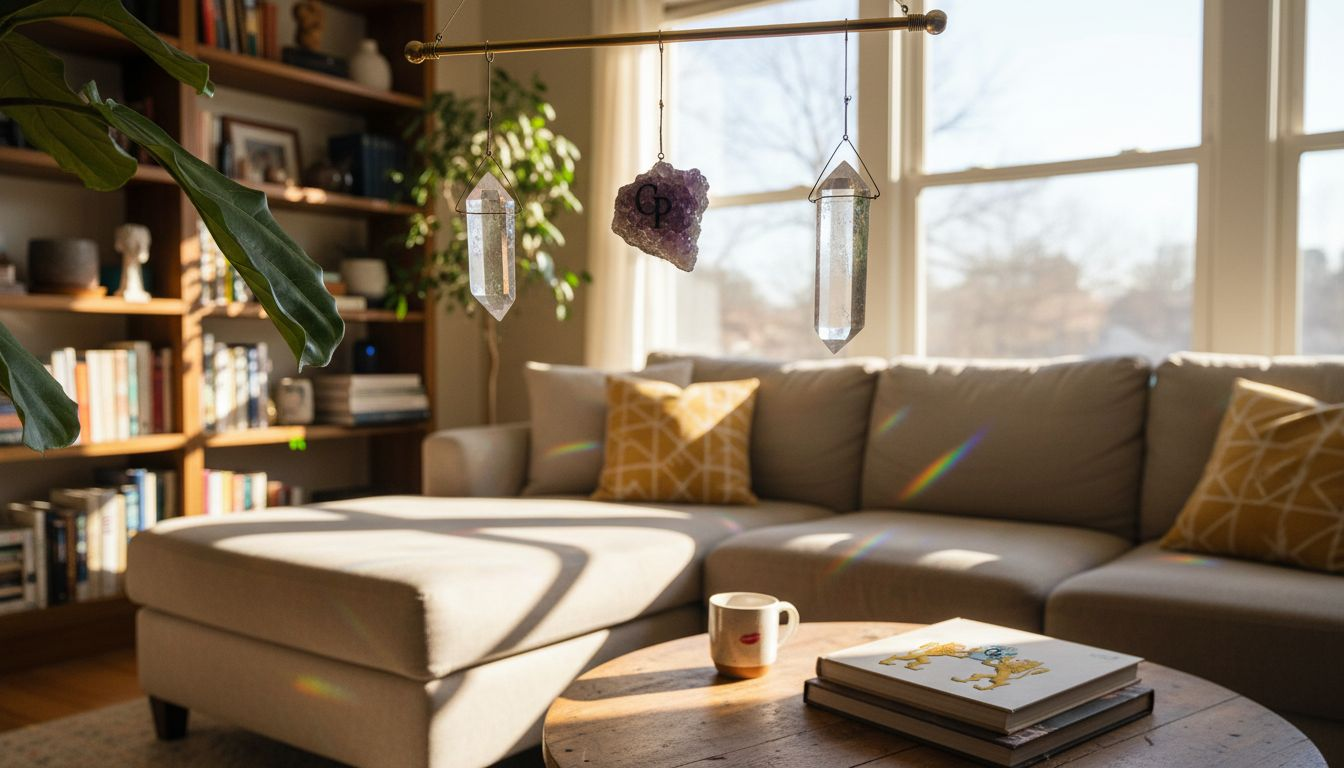
Mineral crystals work beautifully in suncatchers, window hangings, and chandelier installations. They last indefinitely when properly cared for, making them a long-term investment in your home’s elegance.
Here’s a quick comparison of common hanging crystal types and their best uses:
| Crystal Type | Visual Qualities | Best Application | Durability Level |
|---|---|---|---|
| Natural Minerals | Rich color, natural shapes | Suncatchers, window decor | Very High |
| Lead Crystal | Maximum sparkle, clarity | Chandeliers, focal pieces | High (if cared for) |
| Lead-Free Crystal | Bright, eco-friendly | Homes with kids/pets | High |
| Crystal Glass | Affordable, reflective | Decorative clusters, accents | Moderate |
| Swarovski Crystal | Precision cut, vivid shine | Modern minimalist displays | High |
Manufactured Crystal Types
Manufactured crystals offer consistency, affordability, and precision-cut designs that natural minerals can’t match:
-
Lead crystal. Premium quality with exceptional clarity and sparkle; typically features intricate faceting for maximum light refraction.
-
Lead-free crystal. Eco-friendly option that maintains excellent brilliance without lead content; ideal for homes with children or pets.
-
Crystal glass. Affordable alternative that mimics crystal appearance; less dense than true crystal but still delivers light reflection.
-
Swarovski crystals. Precision-engineered with perfect geometric cuts; renowned for consistent brilliance and color quality.
Crystal Forms and Shapes
The shape of hanging crystals dramatically affects how they distribute light throughout your room. Common forms include:
-
Prisms and drops. Classic elongated shapes that cast distinct rainbow patterns on walls and ceilings.
-
Spheres and orbs. Round designs that create soft, diffused light effects and work well in modern minimalist spaces.
-
Icicles and teardrop shapes. Elegant tapered forms that channel light downward and add vertical visual interest.
-
Geometric faceted designs. Multi-sided cuts that maximize light refraction and create intricate shadow patterns.
The crystal type and shape work together to determine light quality—a faceted lead crystal prism creates sharp rainbow patterns, while a smooth amethyst sphere produces softer, warmer light diffusion.
Choosing the Right Type for Your Space
Consider the existing light in your room when selecting crystal types. Rooms with abundant natural light benefit from darker minerals like amethyst. Spaces needing brightness enhancement work better with clear quartz or lead crystal prisms.
Your décor style matters too. Modern minimalist interiors pair well with geometric manufactured crystals, while traditional spaces suit natural mineral formations.
Pro tip: Visit a showroom or order samples to observe how different crystal types interact with your specific room’s lighting conditions—what sparkles beautifully in one space may feel overwhelming in another.
How Hanging Crystals Enhance Space and Light
Hanging crystals transform ordinary rooms by manipulating light in ways that brighten spaces and create visual interest. They work through the same optical principles that scientists study in advanced materials—bending, scattering, and dispersing light to enhance your environment. The result is a more vibrant, elegant atmosphere that feels larger and more welcoming.
Light Refraction and Dispersion
When light enters a hanging crystal, it bends and splits into its spectrum components. This process, called refraction, creates those signature rainbow patterns that dance across your walls and ceilings. Photonic crystals manipulate light waves through periodic structures that affect how light propagates, and hanging crystals simulate this effect at a practical scale.
The precision-cut facets on quality crystals multiply these refraction points. More facets mean more light bending, creating richer color displays and more dynamic sparkle throughout your space.
Creating Brightness and Depth
Hanging crystals act as light multipliers in your room. They catch both natural sunlight and artificial light, then scatter it in multiple directions. This dispersal makes rooms feel brighter without adding actual light sources.
The effect works especially well in rooms with limited windows. A single suncatcher with hanging crystals can illuminate an entire corner. In dimly lit spaces, they maximize every available light source.
Visual Space Enhancement
The movement and sparkle of hanging crystals trick your eye into perceiving more visual activity and depth:
-
Dynamic movement. Light patterns shift throughout the day as the sun’s angle changes, creating living décor that evolves.
-
Focal points. Strategically placed crystals draw the eye, making rooms feel more intentionally designed.
-
Perceived size. Bright, sparkly surfaces make spaces feel larger and more open than they actually are.
-
Texture and dimension. Crystals add visual layers, preventing rooms from feeling flat or monotonous.
Ambient Mood Creation
Hanging crystals influence the emotional atmosphere of your space. Clear crystals create energizing, uplifting environments. Colored crystals like amethyst or rose quartz add warmth and calm. The quality of light they produce affects how people feel in the room.
Even modest hanging crystals shift the mood. They introduce elegance and intentionality that plain walls cannot achieve. Your space feels more curated, more thoughtful.
Hanging crystals don’t just reflect light—they transform it into cascading rainbows and sparkle that fundamentally changes how a room feels and functions.
Layering Light Sources
Combine hanging crystals with your existing lighting for maximum impact. Position them near windows to amplify natural light. Hang them in front of lamps or chandeliers to distribute artificial light more beautifully.
This layered approach creates complexity and richness that single light sources cannot provide. Your room becomes an orchestrated environment rather than simply a lit space.
Pro tip: Position hanging crystals where morning or afternoon sunlight hits them directly—this creates dramatic rainbow effects without requiring additional lighting investment.
Key Features and Quality Considerations
Not all hanging crystals deliver the same visual impact or longevity. Understanding what separates premium pieces from mediocre ones helps you invest wisely in your home. Quality directly affects how brilliantly your crystals sparkle and how long they’ll enhance your spaces.
Clarity and Optical Properties
Clarity is the foundation of crystal quality. High-quality hanging crystals appear transparent with minimal cloudiness or haziness. Even tiny imperfections scatter light unpredictably, reducing sparkle and rainbow effects.
Look for crystals with well-defined geometric shapes and minimal inclusions that ensure optimal light refraction. Inclusions are internal flaws or foreign materials trapped during formation. The fewer inclusions, the more brilliant your crystals appear.
Test clarity by holding the crystal up to light. It should glow evenly without dark spots or murky areas. This simple check reveals quality instantly.
Cut Precision and Faceting
The cut determines how effectively crystals refract light into rainbows. Precision-cut facets multiply refraction points, creating richer sparkle and more dynamic light patterns. Machine-cut crystals offer consistent angles and symmetry that hand-cut pieces struggle to match.
Count the facets when comparing crystals. More facets generally mean more light bending and greater visual impact. However, quality of cut matters more than quantity—perfectly symmetrical facets outperform numerous irregular ones.
Material Quality and Origin
Choose between these material options based on your priorities:
-
Lead crystal. Premium option with exceptional brilliance; typically 24-32% lead content for maximum sparkle.
-
Lead-free crystal. Eco-friendly choice maintaining excellent clarity; ideal if you have children or pets.
-
Natural minerals. Quartz, amethyst, and citrine offer authentic beauty and lasting value.
-
Crystal glass. Budget-friendly alternative with acceptable light reflection properties.
Structural Integrity and Defects
Crystal lattice perfection and absence of structural defects directly impact durability and sparkle. Examine crystals for chips, cracks, or cloudy patches that indicate damage or poor formation.
Run your finger gently across the surface. Smoothness ensures optimal light interaction. Rough patches or micro-cracks scatter light unevenly, reducing brilliance.
Check suspension hardware too. Low-quality wire or string causes twisting that dulls the crystal’s appearance over time.
Size and Uniformity
Larger crystals catch more light but need appropriate spaces to showcase their brilliance. Tiny crystals work in clusters but disappoint as standalone pieces. Match crystal size to your room’s scale and the hanging location’s visibility.
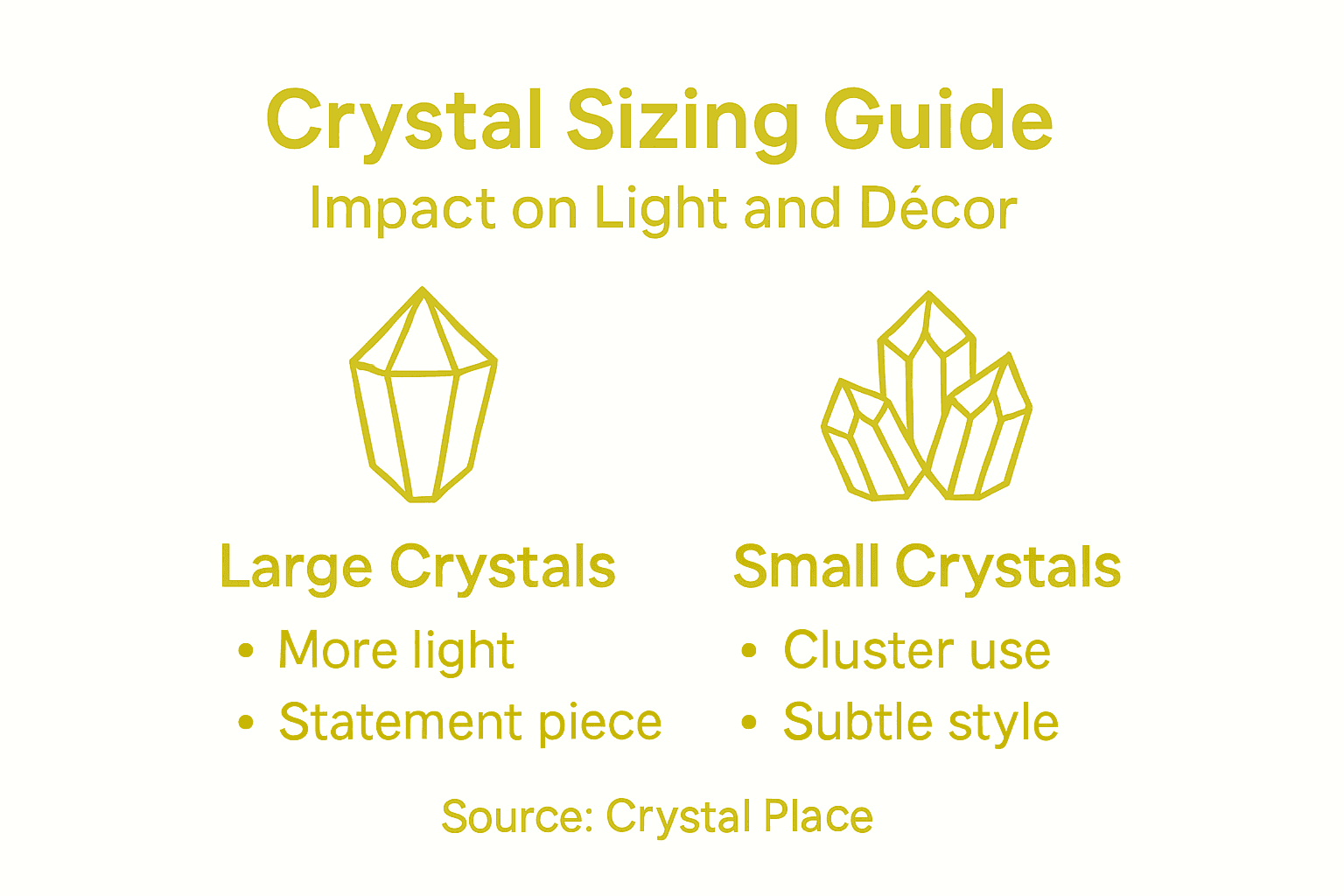
Uniformity matters when hanging multiple crystals. Consistent sizing and coloring create cohesive, intentional designs. Mismatched pieces feel accidental rather than curated.
Before investing, review these factors influencing hanging crystal performance:
| Factor | Impact on Appearance | Influence on Longevity | Note for Buyers |
|---|---|---|---|
| Clarity | Enhances sparkle | Essential for brilliance | Check for cloudiness |
| Faceting | Increases rainbow effect | Reduces dull patches | Precision matters most |
| Structural Defects | Diminishes shine | Can cause breakage | Inspect before mounting |
| Size Uniformity | Creates visual harmony | Simplifies maintenance | Best for grouped pieces |
Premium hanging crystals combine exceptional clarity, precise faceting, and flawless surfaces—this combination creates the brilliant sparkle and rainbow effects that transform your home.
Pro tip: Request samples or examine crystals in natural sunlight before purchasing—artificial store lighting hides flaws and makes lower-quality crystals appear more brilliant than they actually are.
Common Mistakes When Using Hanging Crystals
Mistakes with hanging crystals reduce their visual impact and can damage them permanently. Many homeowners make simple errors that diminish sparkle, cause safety issues, or shorten crystal lifespan. Avoiding these pitfalls keeps your crystals brilliant for years.
Poor Installation and Placement
Incorrect hanging placement wastes your crystal investment. Placing crystals in dark corners or areas without natural light defeats their purpose. They need light sources to refract and create rainbows.
Avoid hanging crystals too high where they’re barely visible or too low where they obstruct sight lines. Position them where morning or afternoon sunlight passes through directly. This simple adjustment multiplies their visual impact dramatically.
Using inadequate hooks or wire that cannot support the crystal’s weight causes drops and breakage. Proper chandelier hooks for crystals ensure safe, secure mounting without stress on the suspension system.
Overcrowding and Visual Chaos
Too many crystals competing for space creates visual clutter rather than elegance. Each crystal needs breathing room to showcase its individual sparkle. Crowded arrangements muddy the light effects and feel chaotic.
Start with fewer, well-spaced pieces. You can always add more later. Spacing allows light patterns to develop distinctly, creating focal points rather than visual noise.
Neglecting Cleaning and Maintenance
Dust and grime accumulate on hanging crystals, dulling their sparkle dramatically. Defects from contamination and improper handling reduce optical properties/12%3A_Solids/12.4%3A_Defects_in_Crystals) and visual appeal over time. A crystal that sparkled brilliantly becomes dull and lifeless.
Clean your crystals quarterly using soft cloths and mild soap. Avoid harsh chemicals or abrasive scrubbing that scratches the surface. Regular maintenance restores brilliance and extends crystal lifespan.
Ignoring Structural Integrity
Handling crystals carelessly causes cracks, chips, and fractures that impair their beauty. These defects scatter light unpredictably rather than creating controlled rainbows:
-
Dropping or bumping crystals. Even small impacts create invisible cracks that spread over time.
-
Using damaged hardware. Bent wire or broken hooks place stress on the crystal, causing fractures.
-
Improper storage. Stacking crystals or wrapping them tightly creates pressure points and damage.
-
Extreme temperature changes. Moving crystals from cold to hot environments too quickly causes thermal stress.
Choosing Wrong Crystal Types for Your Space
Mismatched crystals create visual discord. Mixing clear crystals with heavily colored ones, or blending different sizes without intention, looks unplanned. Your space deserves intentional design choices.
Commit to a cohesive vision. Choose crystals that complement your décor style, room color, and existing lighting. Consistency creates elegance.
The biggest mistake is treating hanging crystals as temporary décor rather than intentional investments in your home’s transformation.
Pro tip: Document your crystal placement with photos in different lighting conditions—this helps you identify what works beautifully before making permanent mounting decisions.
Elevate Your Space with Authentic Hanging Crystals from Crystal Place
If you are inspired by how hanging crystals transform light and add lasting elegance to your home understanding the difference between true crystals and mere glass is crucial. Whether you want to enhance brightness or create captivating rainbow patterns in your living spaces it all starts with selecting authentic crystals with exceptional clarity and precision faceting. At Crystal Place we specialize in offering a comprehensive range of high-quality Swarovski and genuine crystal hanging pieces that bring these optical wonders directly to your doorstep.
Explore our collection of crystal prisms, suncatchers, and chandelier crystals designed to maximize light refraction and elevate decor. Our products are carefully crafted to deliver the brilliant sparkle and durability your home deserves. Don’t settle for less when you can invest in authenticity and craftsmanship that truly transforms your environment. Start creating your radiant, welcoming space today by visiting Crystal Place and discover the perfect pieces to capture and multiply your light beautifully.
Find your ideal crystal pieces now and see the difference premium materials and expert design make in turning everyday light into art. Browse the full selection at Crystal Place and get free shipping on orders over $22 within the USA. Illuminate your home with real crystal brilliance today.
Frequently Asked Questions
What are hanging crystals made of?
Hanging crystals are made from authentic crystalline materials that have a specific atomic structure, allowing them to refract and reflect light in a unique way. Unlike decorative glass, true crystals create distinctive sparkles and rainbows when light interacts with them.
How do I choose the right type of hanging crystal for my space?
Selecting the right type of hanging crystal depends on the light in your space, your décor style, and the atmosphere you want to create. Natural mineral crystals, such as quartz or amethyst, offer rich colors and patterns, while manufactured options like lead crystal and Swarovski crystals provide precision and affordability.
What is the difference between lead crystal and lead-free crystal?
Lead crystal contains lead oxide, which enhances its clarity and brilliance, making it ideal for maximum sparkle. Lead-free crystal, on the other hand, is an eco-friendly option that does not contain lead but still maintains good clarity and light refraction, making it safer for households with children and pets.
How can hanging crystals enhance the lighting in my home?
Hanging crystals enhance lighting by refracting and dispersing both natural and artificial light, creating beautiful rainbow patterns and making rooms feel brighter and more welcoming. They act as light multipliers, maximizing the effects of existing light sources in your space.
Recommended
- Hanging Crystals for Chandeliers: Elevate Decor 2025 – CrystalPlace
- Brighten Your Space with Elegant Hanging Lamp Crystals – CrystalPlace
- Power of Hanging Crystals: Elevate Your Space’s Energy – CrystalPlace
- Why Hanging Crystals Change a Room’s Energy – CrystalPlace
- Crystal Memory — Framed Paper Print — Framed Paper Print – Eman’s Gallery
- Moon Crystal Prisms
- What Is Crystal Opal? Complete Expert Overview - Australian Opal Direct