
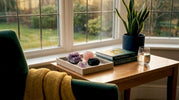
Discover the true role of crystals in decor and transform your home. Learn aesthetic tips and placement strategies for stunning results!
TL;DR:
- Crystals are now widely used in interior design for their aesthetic appeal and mindful qualities. Proper grouping, placement, and rotation enhance their visual and symbolic impact within a space. Although they lack intrinsic healing properties, crystals support mindfulness and calm through focused rituals and intentional decor.
Crystals have moved well beyond spiritual shops and into mainstream interior design, and for good reason. The role of crystals in decor is no longer just a conversation about energy fields or ancient tradition. It is about how a piece of natural amethyst looks stunning on a nightstand, how a crystal prism scatters prismatic light across a white wall at noon, and how the ritual of arranging these pieces can shift how a room feels. This article covers the aesthetics, the psychology, and the practical placement strategies so you can use crystal home accents with confidence rather than guesswork.
Key Takeaways
| Point | Details |
|---|---|
| Style with intention | Group crystals on trays or risers to create purposeful displays that avoid visual clutter. |
| Psychological value is real | Crystals support mindfulness and stress relief through ritual and focus, even without mystical properties. |
| Placement drives impact | Assigning crystals to specific zones like entryways or nightstands maximizes both meaning and aesthetic effect. |
| Light and prisms transform rooms | Crystal prisms refract light into color spectrums, creating visible, dynamic effects on walls and ceilings. |
| Quality matters | Real crystal decor delivers clarity, brilliance, and longevity that manufactured glass simply cannot replicate. |
The role of crystals in decor: design principles that work
The most important thing to understand about using crystals in interior design is that the same rules governing any decorative object apply here. Scale matters. Negative space matters. Color cohesion matters. Crystals are not exempt from good design principles just because they are beautiful raw materials.
Giving crystals a stage
The biggest mistake people make is scattering individual pieces across every surface. Grouped crystal vignettes using trays, risers, and layering consistently look more intentional than lone pieces scattered randomly. A round marble tray with a tall amethyst cluster, a small selenite tower, and a sprig of dried botanicals reads as curated. Three separate crystals dropped on three different bookshelves read as an afterthought.
Risers matter more than most people realize. Elevating one piece in a grouping immediately creates visual hierarchy and makes the eye move deliberately across the arrangement. A wooden slab, a stack of art books, or a brass stand all work. The crystal should not be just sitting on a surface. It should be on a stage.
Here is what to keep in mind when building a crystal vignette:
- Choose one anchor piece (larger, bolder) and two to three supporting pieces in varying heights.
- Keep the color palette tight. Warm-toned stones like citrine and carnelian work together; cold-toned stones like aquamarine and selenite share a visual language.
- Add one non-crystal element like a candle, a plant, or a small ceramic to avoid the display looking like a rock collection.
- Focused crystal placements in fewer zones enhance both visual appeal and personal meaning without overwhelming a space.
Pro Tip: Rotate your crystal displays seasonally the same way you would swap throw pillows. It keeps the decor feeling fresh and gives you a reason to reconnect with the pieces individually before placing them back.
Matching crystals to your existing color scheme is not complicated. Rose quartz pairs with blush and cream palettes. Black tourmaline anchors industrial and monochrome rooms. Green aventurine integrates naturally into earthy, plant-forward interiors. You do not need to redesign your home to incorporate crystals. You just need to pay attention to what is already there.
The psychology behind crystals as mindfulness tools
Here is where the conversation usually goes sideways. People either claim crystals definitively heal the body, or they dismiss them entirely as superstition. Both positions miss the actual value.
Scientific research shows that crystals have no measurable intrinsic healing properties. Experiments using real and fake crystals produced similar calming effects in participants, pointing clearly to the placebo effect and expectancy as the actual mechanism. That is not a reason to throw them out of your decor. It is a reason to understand what they actually do.
“Crystals can work as powerful mindfulness anchors. When you choose a stone you find beautiful and use it as a deliberate point of focus, the ritual itself creates the benefit.” — Hello Plentiful
The physical act of holding, placing, and intentionally arranging a crystal engages your attention. That moment of attention is where the real value lives. Cleansing a crystal once a month by placing it in moonlight or rinsing it in water is not a supernatural act. It is a personal ritual that invites pause, reflection, and intentional engagement with your living space. Rituals like that are genuinely good for your mental state, regardless of what the object is.
Think of crystals as charm pieces rather than cures. A person who places a piece of howlite on their nightstand and takes thirty seconds each night to hold it and set an intention for rest is practicing mindfulness. The crystal is the prompt. The mindfulness is the actual tool.
Pro Tip: If you are new to using healing crystals in decoration for mindfulness purposes, start with one piece in one room. Pick a stone you respond to visually, place it where you will see it daily, and let that visual cue remind you to pause and breathe. That is the entire practice.
Crystal placement by room: ambiance and energy
Knowing which crystals to use is only half the picture. Where you put them shapes what they do aesthetically and what they mean to you symbolically. These two things are not as separate as they sound.
Bedroom crystals
The bedroom is the most common starting point for decorative crystal pieces, and for good reason. Calming crystals for sleep include amethyst, selenite, lepidolite, and howlite. Each has a soft visual quality. Pale lavender amethyst and white selenite both photograph beautifully against linen bedding, which is why they show up constantly in interior design content. But beyond looks, their placement near a nightstand creates a deliberate calm zone at the boundary between your active day and rest.
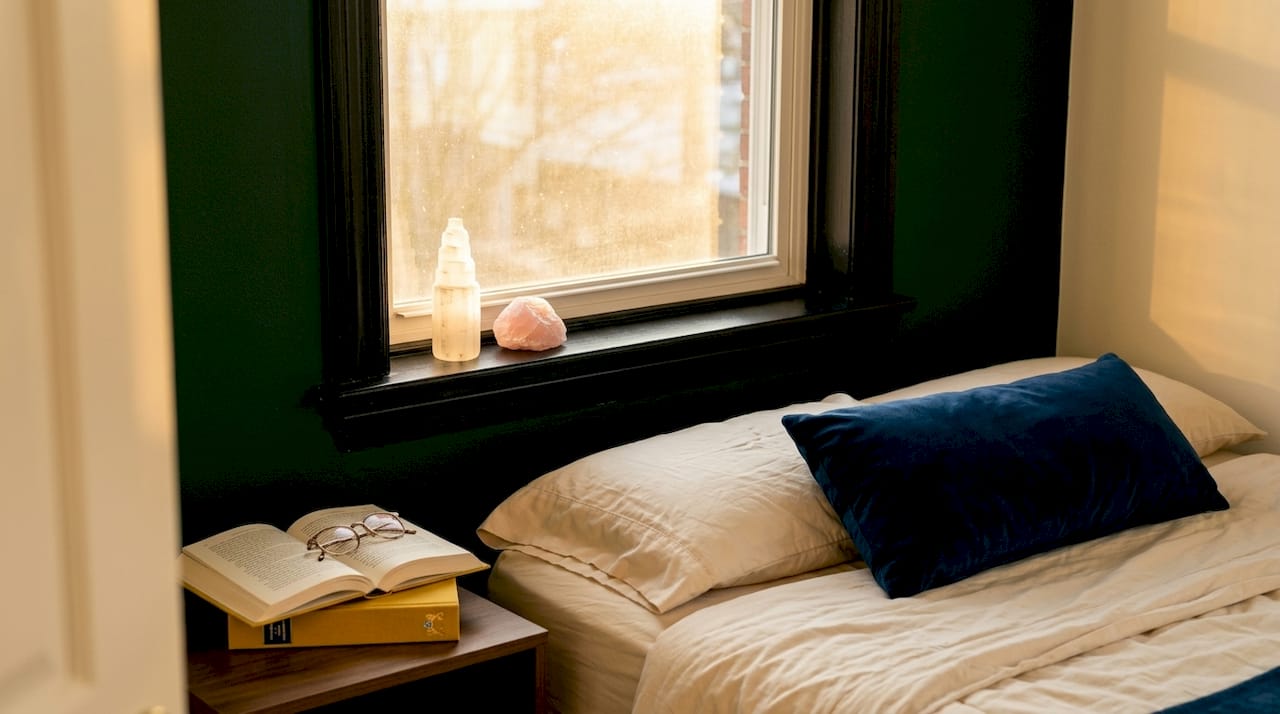
Window sills work particularly well for selenite because its translucent quality makes it glow softly in natural light. Above-bed placements, like a small shelf or a crystal hanging, draw the eye upward and make low-ceiling bedrooms feel taller.
Crystal symbolism in entryways and living rooms
| Crystal | Traditional Symbolism | Recommended Placement | Visual Style |
|---|---|---|---|
| Black tourmaline | Protection, grounding | Entryway, near front door | Rough, matte, dark |
| Rose quartz | Love, warmth | Living room, bedroom | Smooth, pale pink |
| Citrine | Positivity, abundance | Office, kitchen windowsill | Translucent, warm yellow |
| Amethyst | Calm, clarity | Bedroom, reading nook | Deep purple clusters |
| Selenite | Peace, cleansing | Bedroom, bathroom | White, striated columns |
| Clear quartz | Amplification, focus | Any room, near other crystals | Clear, prismatic |
The Vastu and Feng Shui traditions add another layer here that is worth knowing. Crystal animal figurines like elephants in the entryway or turtles near a water feature carry specific symbolic meanings based on placement direction. You do not need to follow these traditions literally to benefit from them. What they offer is a framework for making intentional choices about where objects go, which is exactly what good interior design requires anyway.
One practical note: the same stone’s effect shifts based on its directional placement in Vastu tradition. This is more useful to know as a styling principle than as a metaphysical rule. It reinforces the idea that placement is a creative decision with real consequences for how a space reads.
How crystal prisms change the light in a room
This is where crystals deliver a benefit no amount of interior paint or soft furnishings can replicate. Real crystal prisms split white light into its component colors through refraction and dispersion, and the result is visible on your walls and ceiling in real time.
Crystal prisms bend and split light because each wavelength of color travels through the crystal at a slightly different speed. The result is a spectrum of color cast dynamically across your walls as the sun moves through the day. No two moments look exactly the same. That is a quality no printed wallpaper or light fixture can offer.
Different prism shapes produce different light effects:
- Teardrop prisms cast elongated rainbow streaks and work beautifully in chandeliers and pendant clusters.
- Pendalogue prisms produce broader, more diffuse color fans, which soften a room visually.
- Octagonal prisms generate geometric color patterns that feel more structured and modern.
- Sphere prisms cast circular light rings and work well on window sills catching direct sun.
Positioning matters enormously. Prisms placed in hanging crystal decor near east-facing windows catch morning light. West-facing placements transform late afternoon hours into the most dramatic display. A prism that receives no direct sunlight does not perform. Placement is everything.
For rooms without strong natural light, pairing crystal prisms with a focused LED spotlight positioned a few feet away creates a controlled version of the same effect. It is a reliable workaround for north-facing rooms or basement spaces. Entryway prism placement in particular creates an immediate first impression that sets the visual tone for the rest of the home.
My take on balancing style and mindfulness with crystals
I have seen both extremes up close. Rooms where every surface is covered with crystals and the effect is visual chaos, not calm. And rooms where a single stunning raw amethyst cluster sits on a riser near a window and genuinely stops people when they walk in.
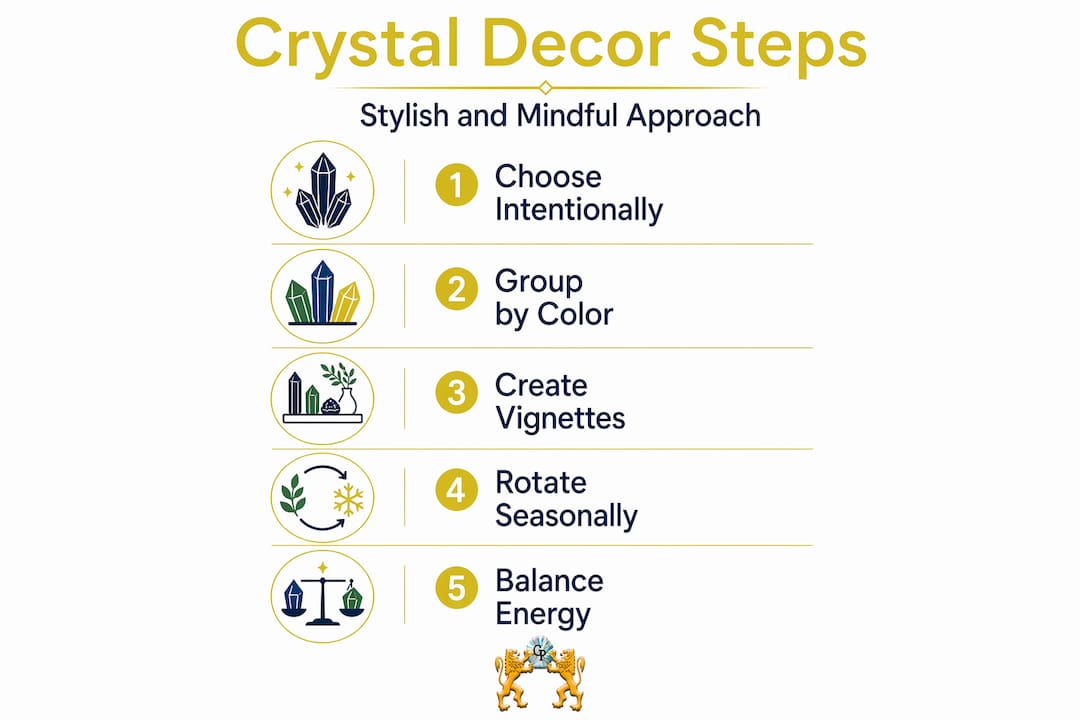
What I have learned is that intention always beats volume. The role of crystals in decor is strongest when each piece has a reason to be where it is, whether that reason is visual, symbolic, or both. The moment you place a crystal just to fill space, it stops doing its job on either level.
I also think the wellness community undersells the practical side of crystals and the design community undersells the mindful side. Both are real. A selenite lamp looks gorgeous on a console table AND it can be the object you reach for when you need a moment of calm before bed. Those two things are not in conflict.
My advice: start with one room, one grouping, and one crystal you actually love looking at. Build from there with intention and restraint. The best crystal decor I have seen always has one thing in common. Less is doing more work than you might expect.
— BCC
Brighten your space with crystal prisms from Crystalplace
If this article has you thinking differently about what crystals can do for your home, Crystalplace is a natural next step. Since 1992, Crystalplace has sourced authentic Swarovski and premium crystal prisms, chandelier components, suncatchers, and hanging crystal accents that bring real optical impact to any room. Whether you are looking to restore a chandelier, build a sunlight display near a window, or find the right crystal prisms for chandeliers that match your interior style, the collection covers everything from classic teardrops to modern geometric shapes. Free shipping on US orders over $22 makes it easy to experiment. Browse the full selection and see what a quality crystal actually looks like in your space.
FAQ
What is the role of crystals in decor?
Crystals serve both aesthetic and mindful functions in home decor. They add visual texture, color, and optical interest to spaces while also serving as personal ritual objects and mindfulness anchors.
Why use real crystal decor instead of glass imitations?
Real crystal has superior light refraction properties and optical clarity that glass cannot match. Authentic crystal prisms produce genuine rainbow effects and maintain their brilliance far longer than manufactured alternatives.
How do I incorporate crystals in my home without it looking cluttered?
Group crystals in dedicated vignettes using trays and risers rather than scattering individual pieces. Assigning crystals to specific functional zones like a nightstand or entryway shelf keeps the display intentional and visually clean.
Do healing crystals in decoration have any scientifically proven benefits?
Science finds no intrinsic healing properties in crystals, but research does support that rituals involving crystals can support mindfulness, reduce stress, and promote a sense of grounding through the placebo effect and focused intention.
Which crystals work best for bedroom decor?
Amethyst, selenite, lepidolite, and howlite are the top choices for bedroom placement. They all have calm visual qualities and are traditionally associated with rest, making them ideal for nightstands and windowsills.
Recommended
- How Crystal Accents Transform Interiors: Design Impact – CrystalPlace
- Enhance your space: the role of crystals in lighting – CrystalPlace
- Creative hanging crystal use cases to brighten your home – CrystalPlace
- Crystal accessories: elevate your space with light and elegance – CrystalPlace