

Discover what is crystal repair and learn techniques to restore your cherished pieces. Preserve beauty and value with this practical guide!
TL;DR:
- Crystal repair includes techniques from simple surface polishing to professional reassembling of broken pieces, depending on the damage and crystal type. Proper identification of materials and damage assessment are essential to prevent further harm and preserve the item’s value, with some repairs best handled by professionals. Implementing regular cleaning, careful handling, and routine inspections can significantly reduce the risk of damage and extend the lifespan of crystal objects.
Crystal repair is not the mysterious, all-or-nothing proposition most people assume it to be. Understanding what is crystal repair means recognizing that it covers a wide spectrum of techniques, from buffing a surface scratch on a decorative prism to professionally reassembling a shattered antique chandelier piece. Whether you own Swarovski ornaments, heirloom glassware, or a chandelier that has seen better days, knowing how the crystal repair process works puts you in control of preserving both the beauty and the value of what you own. This guide covers materials, damage types, DIY methods, and when to call a professional.
Key takeaways
| Point | Details |
|---|---|
| Material matters first | Identifying whether your piece is lead crystal, acrylic, or mineral glass determines which repair method is safe to use. |
| Not all damage is fixable | Surface scratches are often repairable at home, but deep cracks and structural breaks typically require professional restoration. |
| DIY has clear limits | Polishing compounds and UV adhesives work for minor damage, but the wrong tool on the wrong material causes permanent harm. |
| Professional repair preserves value | For antiques and collectibles, expert restoration protects market value in ways that amateur repairs cannot. |
| Prevention beats repair | Proper storage, handling, and routine cleaning dramatically reduce the frequency and severity of crystal damage. |
What crystal really is and why it affects repair
Before you attempt any repair, you need to understand what you are working with. The word “crystal” gets applied loosely, and that looseness causes real problems when people choose repair methods.
True lead crystal contains a percentage of lead oxide, which gives it exceptional clarity, weight, and the ability to refract light brilliantly. Regular soda-lime glass lacks those properties and behaves differently under polishing, grinding, and adhesive bonding. The difference between glass and crystal matters enormously when you are deciding how aggressively to polish a piece or which adhesive to trust.
Beyond decorative crystal, collectors also deal with other crystal types worth knowing:
- Lead crystal: Heavy, highly refractive, relatively soft at around 5.5 on the Mohs scale. Polishable but chips easily.
- Acrylic crystal: Lightweight, scratch-prone, but acrylic polishing compounds can remove most surface scratches in two or three polishing cycles.
- Mineral glass: Scores about 5 on the Mohs scale, resists light wear well, but cannot be polished if scratched and risks shattering on impact.
- Synthetic sapphire: Scores 9 on the Mohs scale and is nearly scratch-proof, but it is brittle and cannot be polished when damaged, making replacement the only real option.
Here is a quick comparison to keep nearby when assessing a piece:
| Crystal type | Hardness (Mohs) | Polishable? | DIY repair possible? |
|---|---|---|---|
| Lead crystal | ~5.5 | Yes | Yes, with care |
| Acrylic | ~3 | Yes | Yes, readily |
| Mineral glass | ~5 | No | No |
| Synthetic sapphire | ~9 | No | No |
The takeaway: always identify your material before touching a repair tool. Polishing mineral glass will scratch it further. Using the wrong adhesive on lead crystal will cloud it permanently.
Common types of crystal damage and what they mean for repair
Understanding crystal damage is not just about spotting the problem. It is about reading what the damage tells you before you commit to a repair approach.
Surface scratches are the most common complaint and the most forgiving. On lead crystal and acrylic, fine surface scratches often respond well to polishing. The quick way to assess severity is the fingernail test. Run your fingernail across the scratch. If it catches the scratch, the damage is likely too deep to polish out effectively. If your nail glides over it, polishing is worth attempting.
Chips are localized material losses, usually at edges and facets where crystal is thinnest. Small chips on non-structural pieces can be smoothed with a fine diamond pad, though you will lose a tiny amount of edge definition. Chips on load-bearing pieces or ornate facets require professional attention.
Cracks are the most serious concern. A hairline crack in a decorative piece might be stabilized with UV-curing adhesive, but a crack that runs through a structural area threatens the integrity of the entire piece. Thermal stress, impact, and improper storage are the three most common causes.
Complete breaks where a piece has fractured into two or more sections can sometimes be rejoined with precision adhesives. The quality of the result depends heavily on how clean the break is, whether both surfaces are undamaged, and whether the piece will bear any load after repair.
Damage that is typically repairable at home:
- Light surface scratches on lead crystal or acrylic
- Minor edge chips on decorative (non-structural) pieces
- Clean breaks on ornamental items with matching surfaces
Damage that usually requires professional restoration:
- Cracks that extend more than a few millimeters
- Damage on antique, signed, or high-value collectible pieces
- Chips that compromise a faceted or engraved surface
- Any break on a piece with sentimental or significant monetary value
How to fix crystals at home: step-by-step methods
DIY crystal repair works well within specific boundaries. The key is preparation and restraint. Rushing a repair or skipping preparation is how minor damage becomes permanent damage.
-
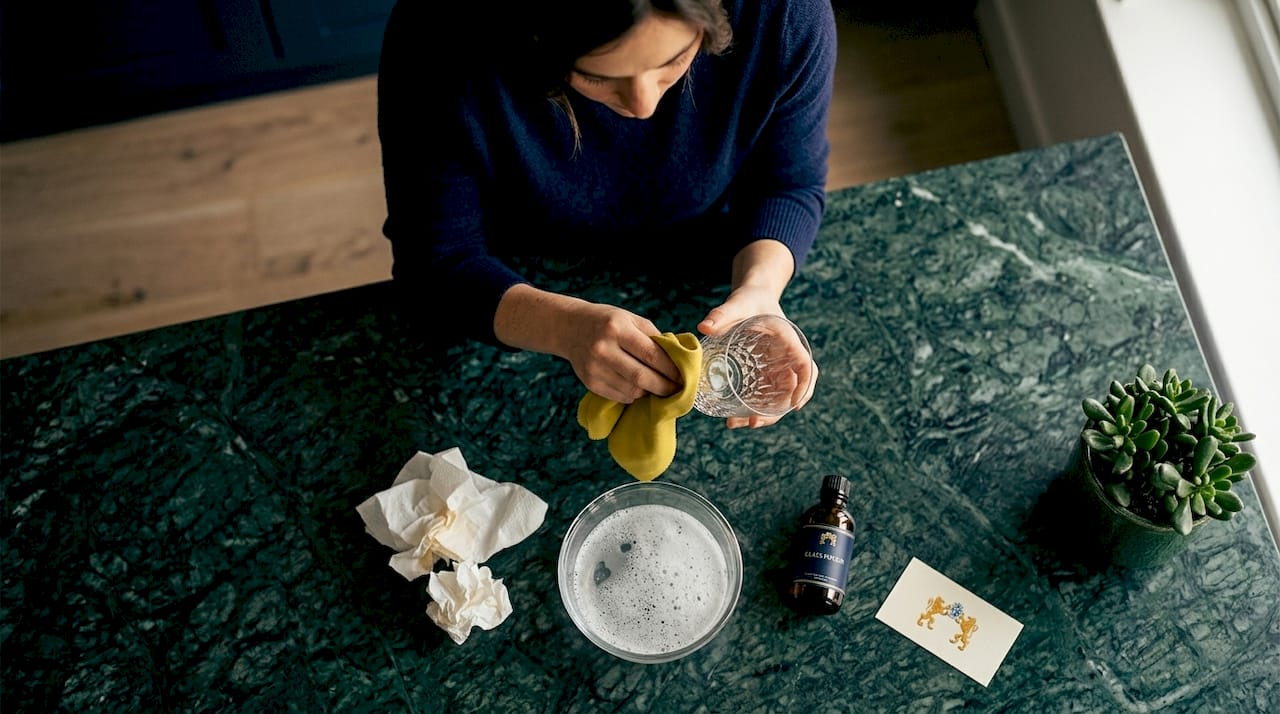
Clean the piece thoroughly. Remove all oils, dust, and residue before doing anything else. For most decorative crystal, warm water and a few drops of dish soap work well. Dry completely with a lint-free cloth. Never use abrasive cleaners. Note that for antique silicate glass, standard cleaning approaches can cause corrosion over time, so use water only or consult a professional.
-
Assess the damage type using the fingernail test. Confirm you are dealing with something in the repairable range before investing time in polishing compounds or adhesives.
-
For surface scratches on lead crystal or acrylic, apply a small amount of appropriate polishing compound (cerium oxide for lead crystal, plastic polish for acrylic) to a soft microfiber cloth. Work in small circular motions over the scratch with light pressure. Check progress after each pass. Do not over-polish in one spot or you risk creating an uneven surface.
-
For chips on decorative edges, a fine-grit diamond pad (starting around 400 grit and finishing at 1000 or higher) can smooth the rough area. Work slowly, keep the surface wet, and check frequently. The goal is to soften the damage, not reshape the piece.
-
For clean breaks, a UV-curing adhesive offers the clearest bond for transparent crystal. Apply a thin, even layer to one surface, press the pieces together carefully, and cure with a UV lamp according to the product instructions. Remove any squeeze-out immediately with a cotton swab before curing.
-
Final polish. After any repair, a light pass with a clean polishing cloth restores surface brilliance.
Pro Tip: Never attempt adhesive repairs in direct sunlight. UV-curing adhesives can begin setting before you have properly aligned the pieces, leaving you with a misaligned, permanently bonded break.
When to call a professional
Some repairs belong in expert hands. Knowing where that line sits protects both your crystal and its value.
Professional crystal restorers have access to tools and techniques that simply cannot be replicated at home. They use equipment like crystal presses to apply even pressure during reassembly, preventing the cracking that happens when pressure is uneven. They also work with grinding wheels, engraving tools, and polishing lathes that can restore faceted surfaces to their original geometry.
Situations that call for professional help include:
- Antique and heirloom pieces: Museum conservation research confirms that common cleaning methods can degrade antique silicate glass over time, so restoration of valuable older pieces should always involve professional evaluation.
- Collectible items where originality matters: Using the wrong replacement material or technique can reduce market value on collectible pieces, just as substituting non-original components does on collectible watches.
- Deep cracks or structural damage: These require precision grinding and sometimes resin filling techniques that go beyond consumer-grade products.
- Chandelier components: Chandelier crystals often require matched replacements to maintain visual consistency. The Crystalplace chandelier restoration service handles this with an eye toward matching existing components precisely.
When looking for a professional restorer, ask specifically about their experience with your type of crystal, ask to see before-and-after examples, and ask whether they carry any guarantee on their work. Reputable restorers will answer all three questions without hesitation.
Crystal repair and maintenance: keeping damage from happening
The best crystal repair is the one you never need to make. A few consistent habits make a dramatic difference in how often you will be dealing with chips, cracks, and scratches.
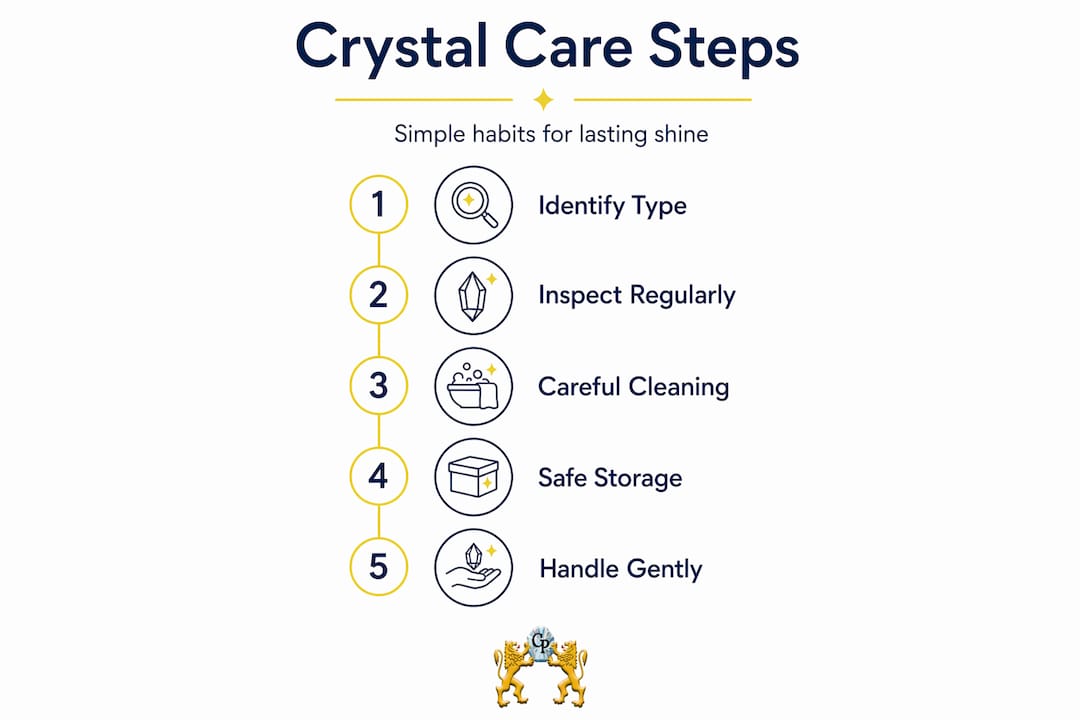
Cleaning practices are where most damage begins. For decorative and chandelier crystals, avoid harsh chemicals and abrasive cloths. A dedicated crystal cleaner outperforms soap and water in both safety and results, and the crystal cleaner vs soap water comparison makes that case clearly. Use lukewarm water only, never hot, since thermal shock is a genuine risk for lead crystal.
Storage and handling habits matter just as much. Keep crystal pieces wrapped individually in acid-free tissue when not displayed. Never stack crystal directly against other hard surfaces. When handling, hold pieces from the base rather than by handles, rims, or decorative elements, since these are structurally weaker points.
Routine inspection is a habit worth building. A quick visual check of chandelier strands, display pieces, and stored items every few months catches minor chips and loose components before they become larger problems. You can learn how to fix loose crystal strands yourself before a small issue turns into a strand on the floor.
Pro Tip: For chandelier crystals, periodically check the pins and connectors that hold strands together. Metal fatigue at connection points causes more crystal losses than direct impact does.
My honest take on crystal repair
In my experience working with crystal collectors and restoration projects, the biggest mistake I see is people treating repair as a binary. They either attempt a full DIY fix on something that needs professional hands, or they give up entirely on a piece that could easily be polished back to beauty in twenty minutes at home.
What I have learned is that the crystal repair process rewards patience over confidence. I have seen beautiful lead crystal decanters destroyed by aggressive polishing from someone who wanted to fix a hairline scratch that was barely visible. And I have seen collectors toss away Swarovski ornaments with nothing more than light surface haze that a proper polish would have resolved in minutes.
The other misconception I run into constantly is that repair somehow diminishes a piece. Done correctly with matched materials and appropriate techniques, a good repair is invisible. Done poorly, it announces itself permanently. That is why material identification and honest damage assessment are not optional steps. They are the entire foundation of any successful restoration.
My advice: be honest about what you are looking at, match your method to your material, and do not let pride push you past the point where a professional should take over. The collectors who maintain the most beautiful pieces are not the most skilled repairers. They are the most clear-eyed about their limits.
— BCC
Restore and maintain your crystals with Crystalplace

Since 1992, Crystalplace has been a trusted source for collectors, homeowners, and lighting professionals who want authentic crystal products and expert restoration guidance. Whether you are sourcing replacement pieces for a chandelier, looking for the right cleaning solution, or reading up on crystal repair services that restore fixtures to their original brilliance, Crystalplace has resources built specifically for people who care about doing it right. Explore a full selection of Swarovski crystal prisms and decorative hanging crystals, with free shipping on USA orders over $22. When a replacement is the right answer, Crystalplace makes it easy to find an exact match.
FAQ
What does crystal repair actually involve?
Crystal repair covers techniques ranging from polishing out surface scratches to professionally reassembling broken pieces using precision adhesives, grinding, and polishing tools. The right method depends entirely on the crystal type and the damage severity.
Can you repair a cracked crystal at home?
Small, clean cracks on decorative pieces can sometimes be stabilized with UV-curing adhesive at home. Deep or structural cracks, and any damage on antique or high-value collectibles, should be handled by a professional restorer.
How do I know if a scratch is too deep to polish out?
Use the fingernail test. Run your fingernail across the scratch. If it catches, the scratch is likely too deep for polishing and you may need professional help or a replacement piece.
Does repairing crystal reduce its value?
A professional repair using matched materials and correct techniques preserves or even recovers value. Poor repairs, or repairs using non-original materials, can reduce a collectible’s market value significantly.
How often should I inspect my crystal pieces for damage?
A visual check every few months is a reasonable routine for displayed pieces and chandelier components. Catching minor chips and loose connectors early prevents more serious and costly damage later.
Recommended
- Crystal repair services: restoring your fixture’s brilliance – CrystalPlace
- Crystal Chandelier Repair 2026: 95% Satisfaction Guide – CrystalPlace
- 7 Chandelier Restoration Techniques That Work – CrystalPlace
- How to Repair Chandelier Crystals for Flawless Shine – CrystalPlace