

Learn how to design, plan, and install a bespoke crystal chandelier with expert tips on sizing, materials, technical planning, and safe installation.
TL;DR:
- Proper planning of size, style, and lighting function is essential for a successful chandelier.
- Material choices, including crystal type and finish, impact brilliance, maintenance, and sustainability.
- Collaboration with manufacturers and careful installation ensure safety and long-term beauty.
A single chandelier can shift a room from ordinary to unforgettable. Yet many homeowners and interior designers underestimate just how much planning, precision, and creative vision a truly bespoke crystal chandelier requires. This isn’t a plug-in-and-hang situation. From measuring your space correctly to selecting the right crystal grade and coordinating with fabricators, each step builds on the last. Get it right, and you create a living focal point that commands attention for decades. Get it wrong, and you’re left with an expensive fixture that feels out of place. This guide walks you through the entire process with clear, actionable steps.
Key Takeaways
| Point | Details |
|---|---|
| Room assessment is crucial | Proper sizing and ceiling adjustments ensure a harmonious chandelier installation. |
| Crystal type affects brilliance | Choose lead or Swarovski for max sparkle, but consider trends toward smart and sustainable materials. |
| Manufacturer collaboration prevents issues | Involve experts early for structural integrity, light modeling, and seamless execution. |
| Detailed installation planning matters | Proper load support, approved wiring, and post-install inspection protect your investment. |
Assessing your space and vision
Every successful chandelier project starts not with crystals, but with your room. Dimensions, ceiling height, architectural style, and even how natural light enters the space all shape your chandelier’s ideal size, form, and placement. Skipping this step is the single most common mistake designers see in chandelier projects gone wrong.
Sizing is more precise than most people realize. A trusted chandelier sizing formula states: add your room’s length and width in feet, and the result gives you the ideal chandelier diameter in inches. For ceilings taller than 12 feet, scale that diameter up by 1.5 to 2 times. A 14 by 16 foot dining room, for example, would suit a chandelier roughly 30 inches in diameter at standard ceiling height, and up to 60 inches in a dramatic double-height space.
Style is the next big decision. Are you drawn to the layered romance of a classic tiered design, the clean geometry of a modern linear piece, or the warm balance of transitional styling? Explore the full range of chandelier style options before locking in a direction, because your style choice will filter every material and finish decision that follows.
Lighting purpose matters just as much as aesthetics. Ask yourself: is this chandelier meant to provide ambient warmth, dramatic accent lighting, or practical task illumination over a dining table? Your answer changes bulb count, wattage, and even crystal cut selection, since certain crystal types for brilliance scatter light differently.
Use the table below to organize your space assessment before contacting any manufacturer.
| Assessment factor | What to measure or note |
|---|---|
| Room dimensions | Length and width in feet |
| Ceiling height | Standard, vaulted, or cathedral |
| Electrical access | Existing junction box location |
| Structural notes | Sloped ceiling, beam, or joist details |
| Natural light | Window placement and daylight hours |
Key style and function questions to answer upfront:
- What is the primary mood: romantic, minimal, grand, or playful?
- Will the chandelier be on a dimmer or smart control system?
- Are there any sloped or cathedral ceiling adaptations needed?
- What is the approximate budget range, including installation?
Pro Tip: If your ceiling slopes or rises above 14 feet, note the exact pitch angle. Most manufacturers offer adjustable canopies, but they need this measurement early to avoid costly design revisions later.
Defining materials and crystal choices
With your room measured and vision clarified, it’s time to choose the right materials for both style and long-term performance. Crystal type is where many clients focus first, but frame finish, mounting hardware, and light source all work together to define the final look.

Not all crystal is created equal. The crystal options for chandeliers range from mass-market standard glass to hand-cut lead crystal and premium Swarovski strands. Lead and Swarovski crystals deliver superior light refraction thanks to a lead oxide content of 20 to 30 percent or more, compared to standard glass, which has noticeably lower brilliance and a refractive index of just 1.45 to 1.52 versus crystal’s 1.54 to 1.70.
Use this comparison table to match crystal type to your priorities.
| Crystal type | Brilliance | Cost | Maintenance | Sustainability |
|---|---|---|---|---|
| Swarovski | Highest | Premium | Low chip risk | Standard |
| Lead crystal | Very high | Mid to high | Fragile edges | Contains lead |
| Standard glass | Moderate | Budget | Durable | More eco options |
| Hand-blown glass | Artistic | Varies | Handle with care | Can be sustainable |
| Non-lead crystal | High | Mid-range | Low chip risk | Lead-free |
Beyond the crystal itself, the chandelier crystal types explained in detail show how cut shape, facet count, and strand length all affect how light fans across your walls and ceiling. A tight pendalogue cut creates crisp rainbow prisms, while a smooth ball crystal produces softer, rounder reflections.
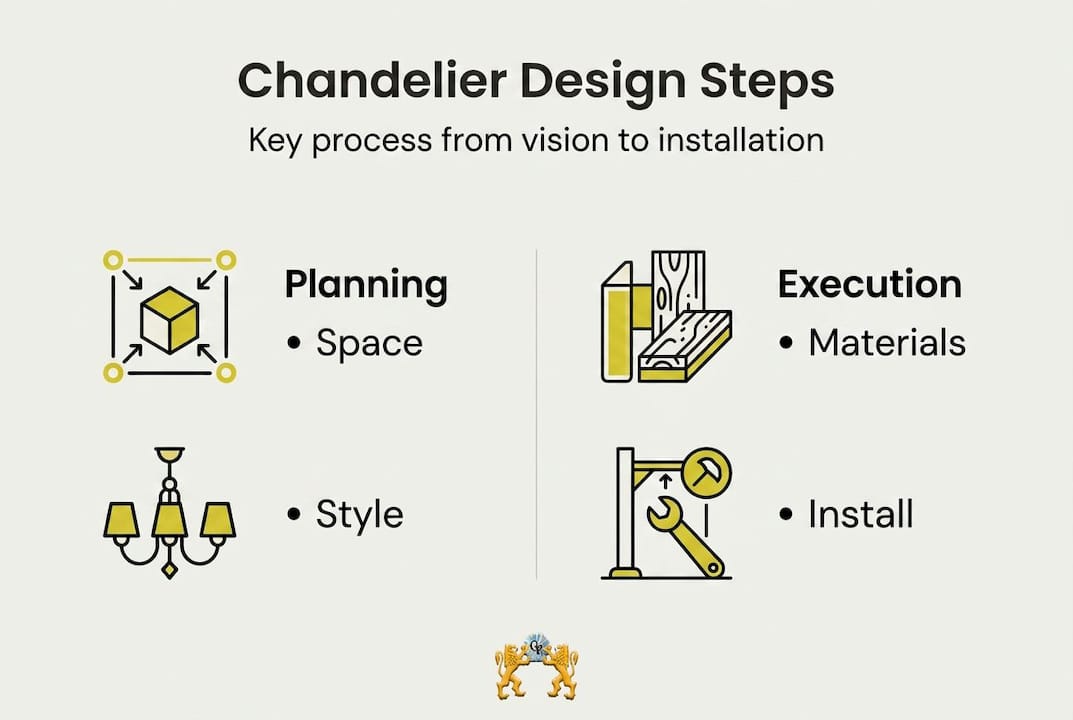
Modern chandelier trends are shifting toward hand-blown glass, non-lead crystals, smart LED integration, and sustainable sourcing, giving you meaningful design choices that also align with environmental values.
Factors to weigh when selecting crystal and frame materials:
- Budget ceiling per square foot of fixture surface
- Desired cleaning frequency and ease of upkeep
- Target brilliance level and rainbow light scatter
- Sustainability or non-toxic material preferences
- Frame finish compatibility: brass for warmth, chrome for modern, matte black for drama
Looking at crystals that enhance brilliance side by side is one of the best ways to build confidence before committing to a full custom order.
Collaborating with manufacturers and technical planning
Once materials are chosen, seamless execution hinges on technical planning and open collaboration with the experts building your fixture. Many homeowners wait too long to loop in their manufacturer, and that delay creates problems that are far harder to fix once fabrication begins.
Involve your manufacturer from the moment you have confirmed room dimensions and a general design direction. Share your ceiling type, electrical box location, and any structural concerns right away. Chandeliers can weigh between 50 and 200-plus pounds and require reinforced junction boxes with structural blocking in the ceiling joist above. Load specs must come from the manufacturer before your electrician or contractor does any prep work.
Here is the step-by-step technical planning sequence every project should follow:
- Structural assessment: Have a licensed contractor verify that your ceiling can support the fixture’s weight.
- Load calculation: Request exact weight specs from the manufacturer, including packaging to avoid surprises.
- Circuit planning: Confirm your existing wiring supports the fixture’s wattage. Many custom chandeliers need a dedicated circuit.
- Photometric study: Photometric modeling maps how light will distribute across your room, helping you avoid dark corners or harsh glare before a single piece is fabricated.
- Prototype approval: Review a physical or digital prototype before full production begins. This is your last chance to catch proportion or finish issues without extra cost.
“The prototype stage is not optional for bespoke work. It’s the checkpoint that separates a successful project from an expensive lesson.”
Pro Tip: Ask your manufacturer for a photometric rendering overlaid on your actual room plan. It takes one extra week but gives you a precise preview of how the finished chandelier will light your space, saving far more time if adjustments are needed.
For an in-depth look at each stage, the full custom design process outlines what to expect from initial concept through delivery, so you can plan timelines and budget milestones with confidence.
Installation, inspection, and final touches
With technical plans complete and pieces on site, it’s time to bring your vision to life with careful installation. This phase demands patience. Rushing it is how crystals get chipped, wiring gets skipped, and expensive fixtures end up hanging off-center.
Always start with a dry fit. Assemble the frame and hang the major components without attaching crystals yet. This confirms the chain length, canopy fit, and structural stability before adding fragile elements. Prototype approval catches issues before the final build, but the dry-fit stage catches last-mile surprises on site.
Follow this installation sequence for safe, beautiful results:
- Verify ceiling support: Double-check that the reinforced box and blocking are in place and rated for the fixture weight.
- Certified electrician installation: A licensed electrician must handle all wiring connections and confirm the circuit is correctly rated.
- Secure the fixture: Attach the canopy, lock the mounting bracket, and confirm the chain or rod is seated correctly.
- Connect and dim: Wire the dimmer switch, pair any smart controls, and test all lighting functions before attaching crystals.
- Crystal attachment and final cleaning: Hang each crystal strand carefully, then wipe the entire fixture with a clean microfiber cloth to remove fingerprints.
After installation, inspect every angle. Look for uneven crystal strands, wobble in the frame, and confirm that light reflects evenly across your ceiling and walls. Use your chosen chandelier crystals guide as a reference if any pieces look mismatched or need replacement.
Review this post-install checklist before signing off:
- Smart features and remote controls are paired and tested
- Dimmer range is smooth from 0 to 100 percent
- Warranty documentation is filed and accessible
- Manufacturer maintenance schedule is noted
Pro Tip: Schedule a professional cleaning at the 12-month mark. Crystal accumulates dust that dulls its brilliance faster than most owners expect, and an annual refresh keeps your fixture looking spectacular for years. Keep an eye on modern chandelier trends 2026 if you ever want to update your crystal drops without replacing the entire frame, and explore custom chandeliers explained if you’re thinking about a second fixture for another room.
Why design intent matters more than crystal type
Here’s something most chandelier conversations miss: the clients who end up happiest are rarely the ones who agonized most over Swarovski versus lead crystal. They’re the ones who thought deeply about how the chandelier should feel in the room.
Proportion is the real secret. A flawless Swarovski piece that’s too wide for its space reads as clumsy, not glamorous. A modest hand-blown glass fixture hung at exactly the right height in a room with thoughtful wall colors and layered lighting can produce a more stunning effect than a chandelier three times its price.
Light distribution and architecture should drive your decisions first, with crystal grade following behind. We’ve seen projects where clients switched from premium lead crystal to a non-lead alternative because the design intent called for a warmer, softer scatter of light. The result was more beautiful for that particular room, not less.
Review the principles behind brilliance and elegance in custom chandeliers and you’ll notice that the most enduring designs prioritize the relationship between fixture, space, and light above all else. Material quality matters, but design intent is what creates the feeling that makes guests stop and stare.
Bring your custom chandelier vision to life with expert support
You now have a clear picture of what it takes to design, plan, and install a bespoke crystal chandelier that truly fits your space. The next step is finding the right materials and support to make it real.
At Crystal Place, we’ve been sourcing authentic Swarovski and premium custom chandelier crystals since 1992. Whether you’re selecting individual crystal drops to customize an existing frame, or starting a full bespoke design from scratch, our team offers expert guidance at every stage. Browse our full catalog of crystal types, frame finishes, and chandelier accessories, and take advantage of free shipping on US orders over $22. When you’re ready to talk specifics, reach out for a personalized consultation and let’s build something extraordinary together.
Frequently asked questions
How do I estimate the right chandelier size for my room?
Add your room’s length and width in feet, and that number becomes your ideal chandelier diameter in inches. For ceilings above 12 feet, scale that diameter up by 1.5 to 2 times to maintain proper visual proportion.
What is the best crystal type for maximum sparkle?
Lead and Swarovski crystals, with 20 to 30 percent lead oxide content, deliver the highest refractive index (1.54 to 1.70) and produce the most intense light scatter and rainbow effects.
Are there modern or sustainable alternatives to traditional crystal chandeliers?
Yes. Modern design trends include hand-blown glass, non-lead crystals, and smart LED-integrated fixtures that reduce energy use while maintaining visual impact.
What are the main safety considerations when installing a custom crystal chandelier?
You must verify ceiling structure, confirm electrical load capacity for fixtures weighing 50 to 200-plus pounds, and always use a licensed electrician for all wiring connections and final installation.
Recommended
- Custom crystal chandelier design guide for interior success – CrystalPlace
- How to Design Custom Chandeliers: Step-by-Step for Elegance – CrystalPlace
- Custom Crystal Chandeliers Explained: Style and Impact – CrystalPlace
- How to Install Chandelier Crystals for Stunning Results – CrystalPlace