

Learn how to select chandelier crystals for maximum style and brilliance. Compare crystal types, avoid common mistakes, and find the perfect fit for your space.
TL;DR:
- Correct crystal choice transforms chandeliers into stunning light-reflecting focal points.
- Room size, light, style, and budget are key factors in selecting crystals.
- Handling and cleaning crystals properly ensures lasting brilliance and aesthetic appeal.
Many homeowners invest in a beautiful chandelier only to feel let down when the light feels flat or the crystals look cheap against the rest of the room. The problem is rarely the chandelier itself. It almost always comes down to the wrong crystal choice. The right crystals transform a fixture from a simple light source into a room’s centerpiece, scattering brilliant light across walls and ceilings in ways that feel almost magical. This guide walks you through every step of the selection process, from preparing your space and understanding crystal types to evaluating quality and troubleshooting common problems.
Key Takeaways
| Point | Details |
|---|---|
| Preparation is essential | Assess room style, lighting needs, and budget before choosing chandelier crystals. |
| Material impacts brilliance | Lead content and crystal cut determine how much sparkle and refraction you get. |
| Quality makes a difference | Check for craftsmanship with consistent color, cut, and clarity for the best results. |
| Match replacements carefully | Replacement crystals should align perfectly with original size and mounting for a cohesive look. |
| Personal style matters | Choosing crystals that fit your unique taste results in the most pleasing design. |
What to consider before selecting chandelier crystals
Before you browse a single crystal, take a step back and assess the room where your chandelier will live. Room size matters more than most people realize. A small dining room with a low ceiling calls for lighter, smaller crystals that won’t overwhelm the space, while a grand entryway with a two-story ceiling can handle larger, heavier drops that command attention.
Natural light plays a huge role in how crystals perform. A room flooded with afternoon sun will show off crystal brilliance all day long. A darker room depends more on the chandelier’s bulbs to activate the crystal’s sparkle, so you’ll want crystals with deeper cuts and higher clarity to catch every photon. Ceiling height also determines how long your crystal drops should be. As a general rule, drops longer than three inches work best when the chandelier hangs at least seven feet above the floor.
Style compatibility is another factor people often overlook. A sleek modern interior pairs best with clean-cut, geometric crystals, while a traditional or vintage space suits more ornate, multi-faceted shapes like pendeloques or rosettes. Chandelier crystal selection tips confirm that the initial vision and space function determine the best type of crystal for any given setting.
Budget is the other reality check. High-grade lead crystal and Swarovski options deliver unmatched brilliance but come at a premium. Decorative glass or acrylic crystals offer a more affordable path with a softer sparkle. Neither is wrong. It depends on your priorities.
Here are the key pre-selection factors to review before you shop:
- Room dimensions and ceiling height
- Primary lighting purpose (ambient glow vs. dramatic sparkle)
- Existing decor style and finish tones
- Natural light availability throughout the day
- Budget range and willingness to invest in premium materials
- Chandelier frame style and existing mounting hardware
Pro Tip: Photograph your room in both daylight and evening light before shopping. This gives you a realistic view of how crystals will interact with your space at different times of day, and it makes it much easier to describe your needs when ordering.
Common mistakes include ignoring scale (tiny crystals on a large fixture look sparse), overfilling a frame until it looks cluttered, and mixing incompatible finishes like silver-toned hardware with warm brass-toned crystals. A little planning here saves a lot of frustration later.
Tools, materials, and crystal types overview
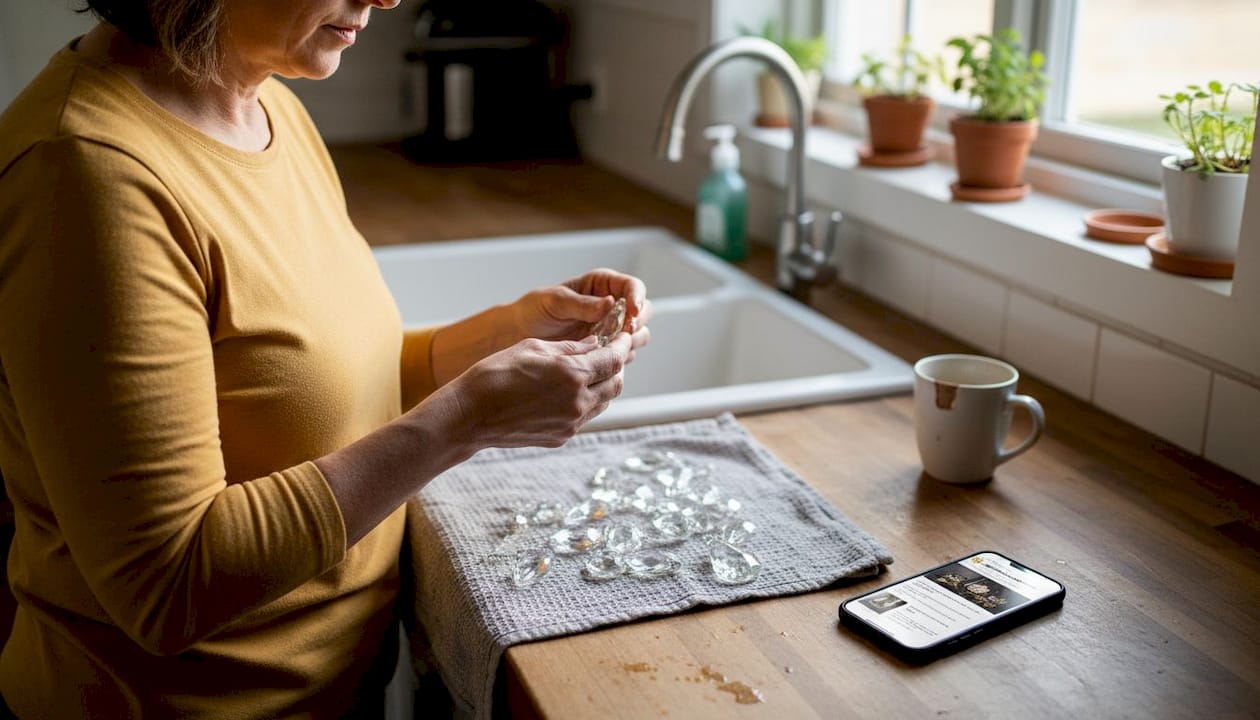
Once you know what your space needs, it’s time to get familiar with the materials and tools involved. Handling crystals without preparation leads to smudges, scratches, and even breakage, so having the right supplies on hand from the start protects your investment.
You’ll need the following before you begin:
- Cotton or lint-free gloves to prevent fingerprints and skin oils from etching crystal surfaces
- A soft microfiber cloth for polishing and final cleaning
- Crystal-safe cleaning solution for any pre-installation cleaning
- Mounting hardware including jump rings, pins, or wire loops appropriate for your fixture
- A padded surface to lay crystals on while sorting and inspecting
Now for the crystals themselves. The material is the single biggest factor in both price and performance. Lead content and shape both influence crystal quality and light refraction, which is why two crystals that look similar in a photo can perform very differently once they’re lit.
Here’s a quick comparison of the main chandelier crystal types available:
| Material | Price Range | Brilliance | Typical Use |
|---|---|---|---|
| Acrylic | $ | Low | Budget decor, kids’ spaces |
| Glass (non-lead) | $$ | Moderate | Casual interiors, rentals |
| Lead crystal (30%+) | $$$ | High | Traditional, formal rooms |
| Swarovski crystal | $$$$ | Exceptional | Luxury, statement fixtures |
Acrylic is lightweight and shatter-resistant, making it a practical choice for high-traffic areas. Standard glass offers a step up in clarity but lacks the refractive depth of lead crystal. Lead crystal, which contains at least 24% lead oxide and often much more, bends and scatters light with a richness that plain glass simply cannot match. Swarovski crystals are cut to exacting tolerances and treated with proprietary coatings that maximize sparkle. You can explore the full range of crystal options explained to match material to your specific design goals.
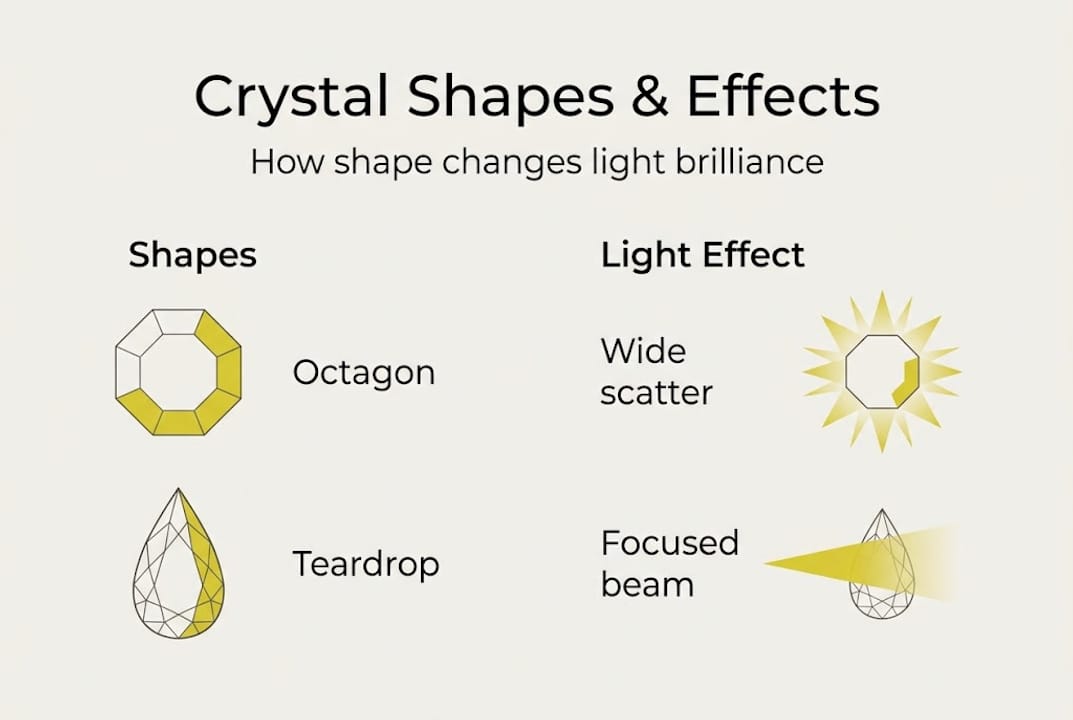
The shape of the crystal also matters. Octagons scatter light broadly. Pendeloques (teardrop shapes) focus light downward. Rosettes and buttons add texture without adding length. Understanding how each shape behaves under light helps you build a fixture that performs exactly the way you envision.
Step-by-step guide to selecting and evaluating chandelier crystals
With your preparation done and your materials understood, here’s a structured process to guide your final selection.
- Define your needs based on room size, style, and lighting goal.
- Shortlist crystal types that fit your budget and material preference.
- Examine crystal quality by checking clarity, weight, and facet sharpness.
- Review connection hardware to confirm pins or loops match your fixture’s mounting points.
- Order samples when possible before committing to a full set.
- Finalize your selection based on real-world light testing.
Checking for color consistency and cut precision are essential when evaluating crystals. A quality crystal should be completely colorless unless it’s intentionally tinted. Any yellow or gray cast signals lower-grade glass. Look at the facets closely. They should be sharp, flat, and uniform. Rounded or uneven facets reduce the crystal’s ability to refract light cleanly.
Pro Tip: Hold a crystal up to a window in natural daylight. High-quality lead crystal and Swarovski pieces will throw vivid rainbow prisms across nearby surfaces. Lower-grade glass produces a dull, washed-out effect. This simple test takes seconds and tells you everything.
Here’s a quick comparison of buying online versus in-store to help you decide where to shop:
| Factor | Online | In-store |
|---|---|---|
| Selection | Very wide | Limited |
| Price | Often lower | Often higher |
| Quality check | Relies on reviews/samples | Can inspect in person |
| Convenience | High | Requires travel |
| Return options | Varies by retailer | Usually easier |
Also check out crystal style examples to see how different cuts and shapes look in real room settings before you decide. And always double-check size recommendations. A crystal listed as 38mm may look very different in person than it does on a screen. When in doubt, order one piece first.
For identifying real crystals, remember: real crystal feels cold and heavy in the hand, while acrylic feels light and slightly warm. Bubbles inside the material, irregular facets, or a slightly greenish tint are all signs of low-quality glass.
Troubleshooting and ensuring chandelier crystal success
Even with careful planning, things can go sideways. Here are the most common issues and how to fix them.
Common problems to watch for:
- Mismatched finishes: New crystals look slightly different in color from the originals due to different batches or manufacturers.
- Improper fit: Pins or loops don’t match the fixture’s mounting holes.
- Inconsistent light distribution: Some areas of the room receive brilliant light while others stay dark.
- Missing pieces: Crystals arrive incomplete or break during shipping.
- Loose connections: Crystals rattle or fall because the mounting hardware is the wrong gauge.
Replacement crystals must match size, hole placement, and style for seamless results. This is the most overlooked detail in restoration projects. Always bring an original crystal sample when sourcing replacements, or photograph it next to a ruler so you have exact measurements.
Important: Always compare new crystals directly against your originals in the same lighting conditions before installing. Even a slight difference in facet alignment or color tone becomes very visible once the chandelier is lit.
For larger restoration or replacement projects, the replacement and restoration tips available through Crystal Place walk you through matching vintage fixtures with modern crystal equivalents. You can also find detailed replacement crystal guidance for specific fixture types.
Once your crystals are installed, maintenance is straightforward. Dust them monthly with a soft brush or microfiber cloth. For deeper cleaning, use a diluted solution of warm water and a small drop of gentle dish soap applied with a lint-free cloth. Dry each piece immediately to prevent water spots. Never use abrasive cleaners or rough cloths, as these scratch the surface and permanently dull the crystal’s brilliance.
What most guides miss about chandelier crystal selection
Most articles on this topic spend all their time on specs: lead percentage, facet count, millimeter measurements. Those things matter, but they’re not the whole story. The most stunning chandeliers we’ve seen over our 30-plus years in this business weren’t built by people who followed a formula. They were built by people who trusted their eye.
There’s no single “right” crystal. A chandelier that mixes Swarovski octagons with antique-style pendeloques can look extraordinary if the proportions are right. A room full of budget glass crystals can still feel luxurious if the light is warm and the layout is thoughtful. The specs give you a foundation, but your instincts give you the result.
We’d also push back on the idea that provenance is just a marketing angle. Real crystal sourcing tips show that authentic materials genuinely behave differently under light, and that difference is visible to anyone who walks into the room. Don’t let anyone convince you that acrylic performs the same as lead crystal. It doesn’t. But don’t let anyone convince you that the most expensive option is always the right one either. Match the material to the room, trust your sense of beauty, and you’ll land somewhere memorable.
Find the perfect chandelier crystals for your home
You now have a clear path from preparation to final selection. Whether you’re building a new fixture from scratch, replacing damaged pieces, or upgrading an existing chandelier, the right crystals make an immediate and lasting difference in your space.
At Crystal Place, we’ve been sourcing authentic Swarovski and high-quality crystal products since 1992. Our full catalog of chandelier crystals and parts covers every style, size, and material type, from budget-friendly glass to premium lead crystal. We offer free shipping on orders over $22 within the USA, and our team is always available to help you match crystals to your specific fixture. Browse the collection today and find exactly what your chandelier deserves.
Frequently asked questions
What are the best types of chandelier crystals for maximum brilliance?
Lead crystal and Swarovski crystals are prized for their brilliance because lead content and shape both influence light refraction and overall sparkle quality. Swarovski’s precision cuts take this even further with proprietary coatings that intensify the effect.
How do I tell if a chandelier crystal is real?
Real chandelier crystals feel cold and heavy and have sharp, flawless facets. Checking for color consistency and cut precision quickly reveals fakes, which often show bubbles, soft edges, or a faint color cast.
Can I replace individual chandelier crystals if one is damaged?
Yes, individual crystals can be replaced, but replacement crystals must match size, hole placement, and style to blend seamlessly with the rest of the fixture.
What’s the best way to clean chandelier crystals after installation?
Use a soft lint-free cloth dampened with warm water and a drop of gentle dish soap, then dry each crystal immediately to prevent water spots and streaking.
Do all chandelier crystals fit all fixtures?
No. Crystal size, hole diameter, and mounting style all vary between fixtures. Always confirm these measurements before ordering, since size, hole placement, and style must align for a proper fit.
Recommended
- Examples of chandelier crystals to enhance brilliance – CrystalPlace
- Chandelier crystal types explained: Brilliance & style – CrystalPlace
- Crystal chandelier styles explained: choose brilliance – CrystalPlace
- How to choose chandelier crystals for stunning lighting – CrystalPlace